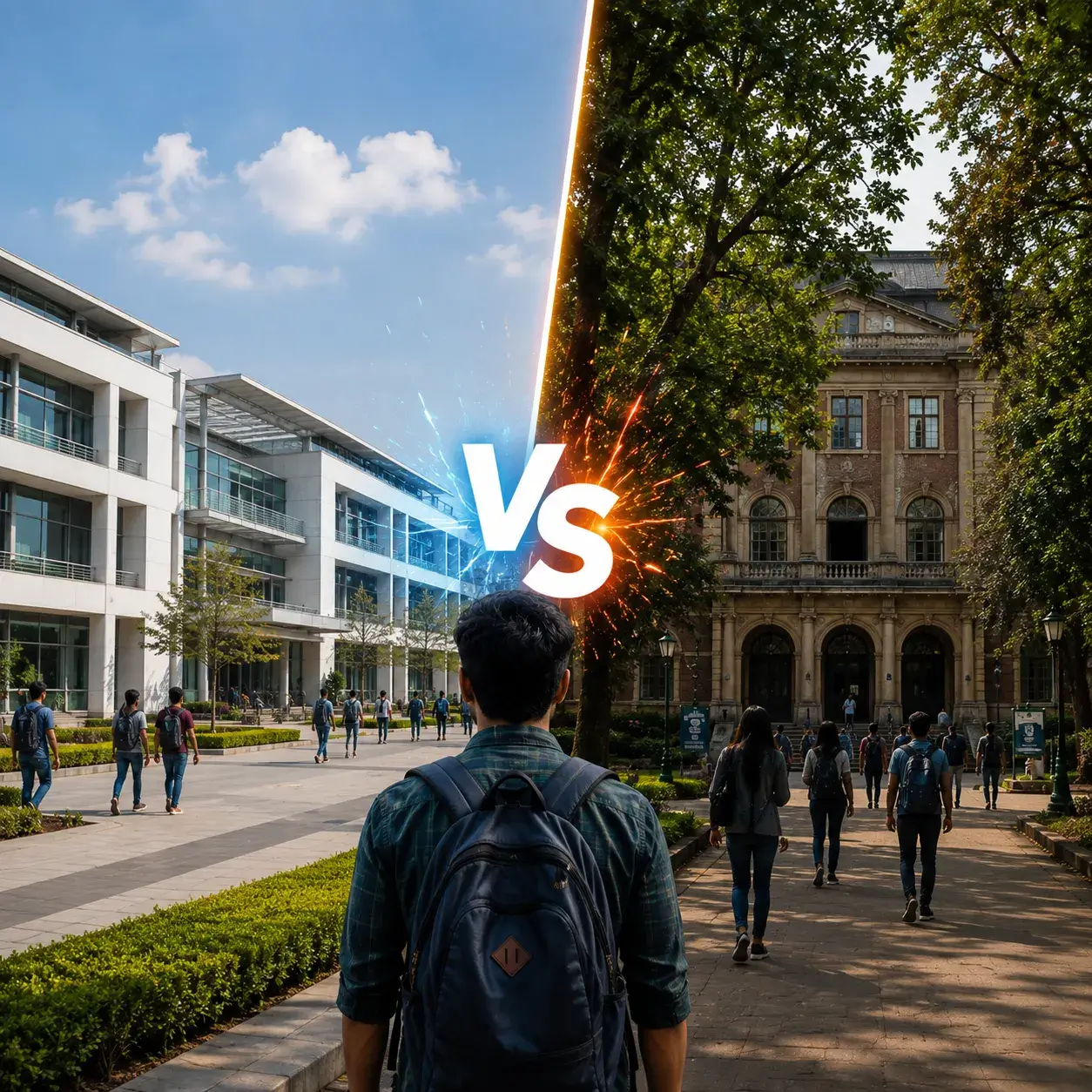
Once the basic distinction between university categories is clear, students often turn to the next obvious markers: rankings and reputation. These can be useful when creating a shortlist, but they rarely tell the complete story. A university that looks impressive on a ranking table may not necessarily offer the right curriculum, teaching approach or opportunities for your particular goals.
Instead, students should look at what the academic experience will actually look like once they enter the campus. A few factors can help make that evaluation more meaningful.
Curriculum and Academic Flexibility at Deemed and Private Universities
A degree is only as valuable as the learning it enables. Students should look at whether the curriculum goes beyond foundational theory and incorporates current industry practices, emerging technologies and practical application. The availability of electives, minors and cross-disciplinary courses can also make a significant difference, particularly for students who are still exploring their interests.
This is especially relevant when comparing options within the private university in India landscape, where institutions can follow very different academic models. A flexible curriculum can allow students to build depth in their chosen field while developing knowledge in complementary areas.
Industry Exposure and Experiential Learning
The transition from classroom to workplace becomes easier when students have opportunities to apply what they learn before graduation. Internships, live projects, industry-led assignments, case studies, competitions and mentorship can expose students to the realities of professional work.
Experiential learning also helps students understand how theoretical concepts work in real situations. It encourages them to deal with ambiguity, collaborate with others and learn from mistakes—skills that are difficult to develop through textbooks alone.
Faculty and Learning Environment at Deemed vs Private University
Faculty members influence far more than what appears on a syllabus. Their academic expertise, research interests and professional experience can shape classroom discussions and introduce students to perspectives they may not encounter otherwise.
The broader learning environment matters too. Students should consider whether the university encourages questioning, collaboration and independent thinking, and whether they have meaningful opportunities to interact with faculty and peers.
Student Outcomes
Placement numbers can offer useful information, but they should not be the only measure of what a university delivers. Students should examine the kinds of roles graduates move into, the industries they enter and whether alumni pursue higher education, entrepreneurship or other career paths.
This becomes particularly important when researching terms such as top 10 deemed university in India or comparing institutions based on rankings. A strong overall ranking may indicate institutional reputation, but programme-level outcomes can tell you much more about what a student can realistically expect.
Campus and Peer Ecosystem at Private University in India
University is also about the people and experiences outside the classroom. Clubs, competitions, student-led initiatives, hackathons, cultural activities, entrepreneurial communities and interdisciplinary projects can help students develop confidence and communication skills while building meaningful networks.
The strongest universities increasingly function as ecosystems where students can experiment with ideas, collaborate across disciplines and learn from people with different perspectives. That broader environment can be just as influential as the formal curriculum in shaping a student's university experience.