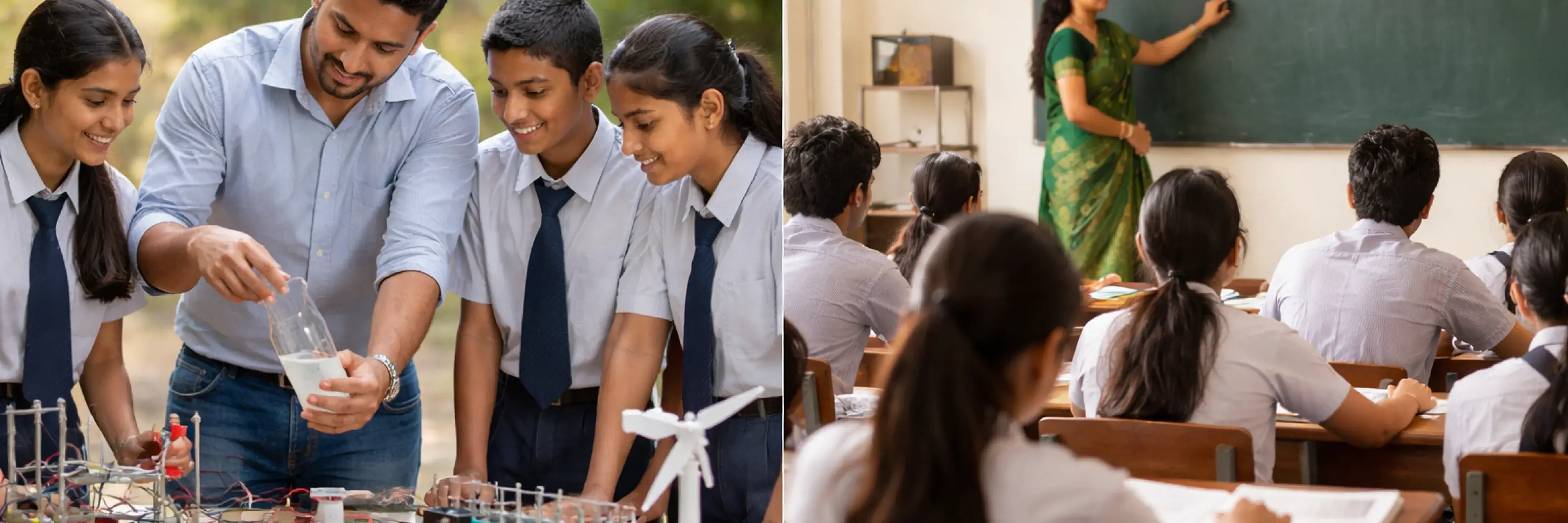
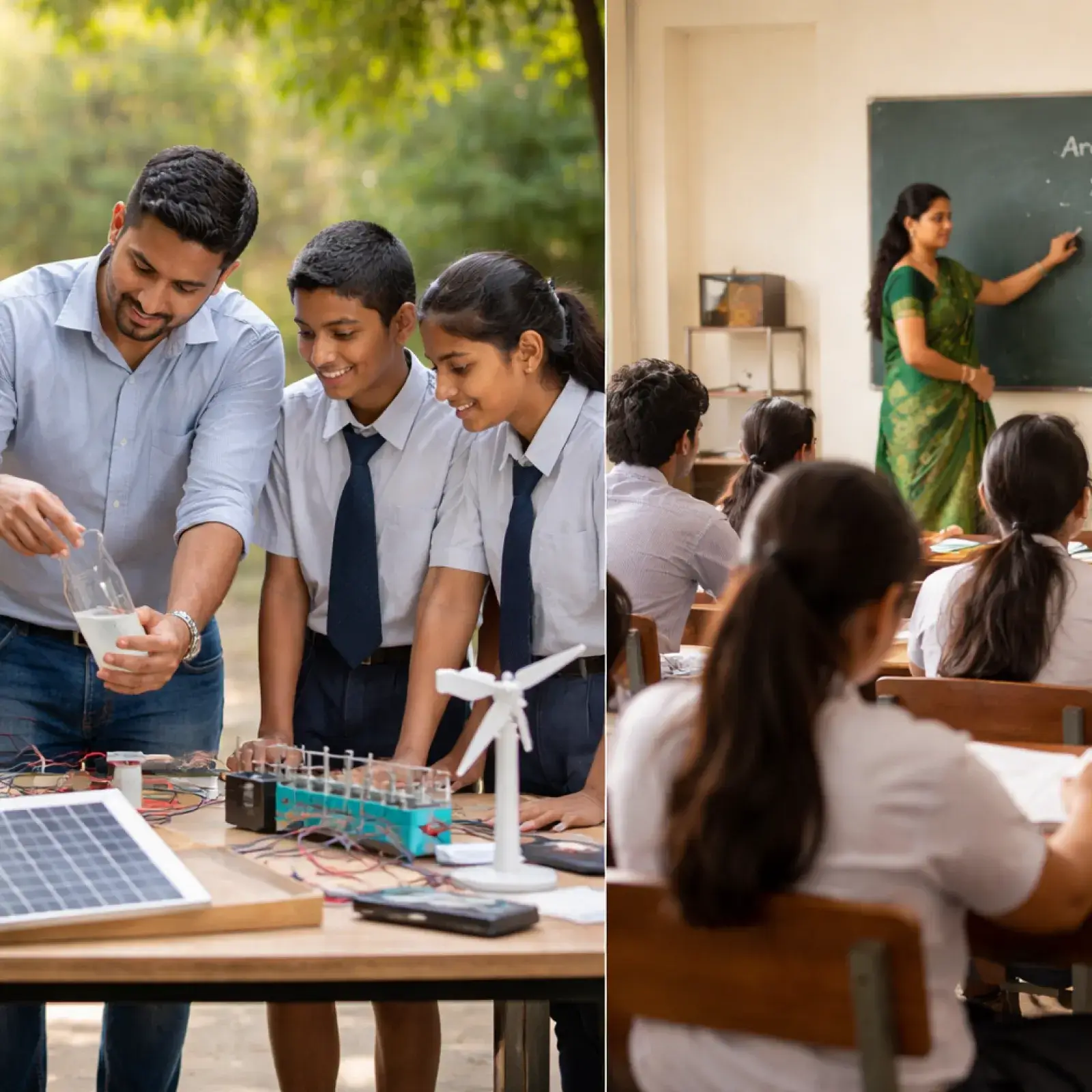
For a long time, the conversation has been framed as experiential learning vs traditional learning, as if one must replace the other. But when you look at how students actually learn and how industries operate, that distinction starts to feel limiting.
The real shift isn't about choosing sides. It's about recognising that learning today needs to be both grounded and applied, structured yet flexible. This is where education begins to move beyond comparison and towards integration.
No Longer an Either-or Decision
The conversation around traditional learning vs experiential learning has often been framed as a choice, but that framing no longer reflects how education actually works today. Both models exist because they solve different parts of the learning process. Traditional learning builds structure, discipline, and foundational knowledge, while experiential learning helps students apply that knowledge in real situations. Separating the two creates gaps. Bringing them together creates continuity. The shift we are seeing across institutions is not about replacement, but about balance.
Where Theory Meets Real Experience
Learning becomes far more effective when students don't have to wait to apply what they've learned. In an integrated system, concepts introduced in the classroom are immediately tested through projects, simulations, or real-world tasks. This is where the benefits of experiential learning begin to strengthen academic understanding. Instead of memorising frameworks, students use them, question them, and refine them through action. Over time, this builds not just knowledge, but clarity and confidence in using that knowledge.
From Classroom Knowledge to Real-World Capability
One of the biggest challenges in education today is the gap between knowing something and being able to act on it. Students often leave with strong theoretical understanding but struggle when faced with unpredictable, real-world situations. This is where the advantages of experiential learning become critical. By working on real problems, collaborating with others, and making decisions under pressure, students begin to develop practical capability. Knowledge becomes something they can rely on, not just recall.
Industry Becoming Part of the Learning Process
Learning is no longer limited to classrooms or campuses. Industry is increasingly becoming an active part of how education is designed and delivered. Through live projects, mentorship, and real-world problem statements, students are exposed to the realities of work much earlier. Well-designed experiential learning programs bring this interaction into the core of the curriculum rather than treating it as an add-on. This not only keeps learning relevant but also helps institutions stay aligned with changing industry expectations.
Shaping The Future of Education
The future of education will not be defined by choosing between experiential learning vs traditional learning, but by how well institutions combine both. Students will need strong foundations, but they will also need the ability to adapt, experiment, and respond to change. Education systems that recognise this will move beyond rigid formats and focus on creating learning environments that are dynamic, applied, and continuously evolving. In that sense, the real shift is not just in methods, but in how we define what it means to be truly educated.