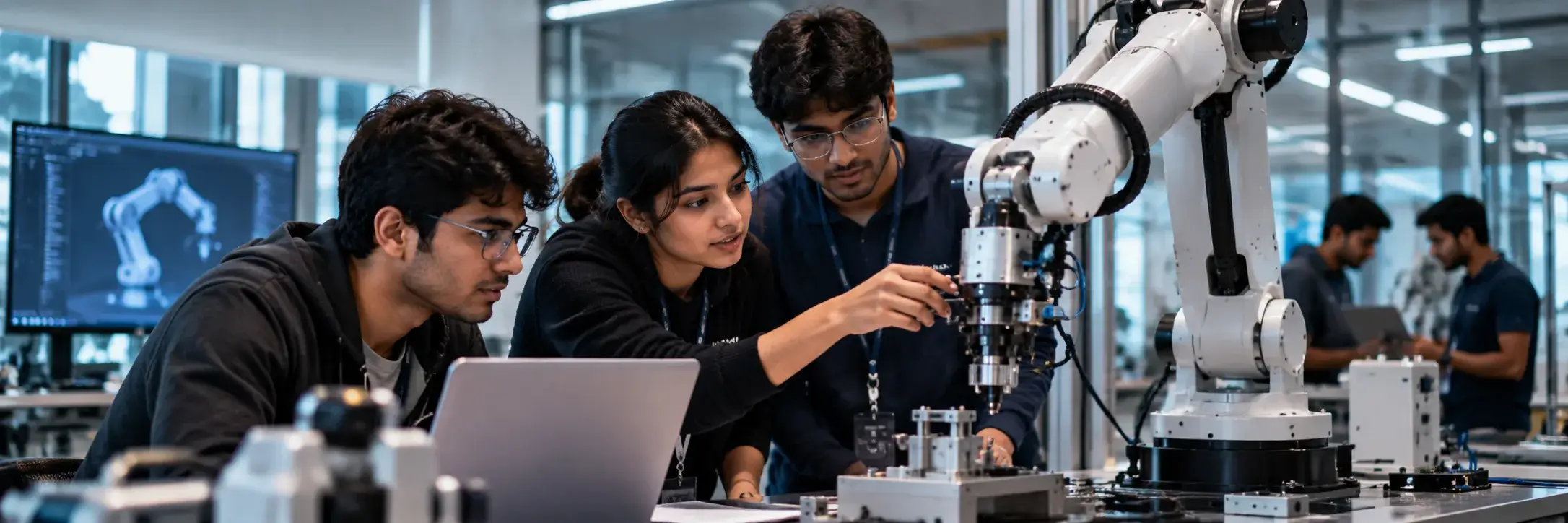
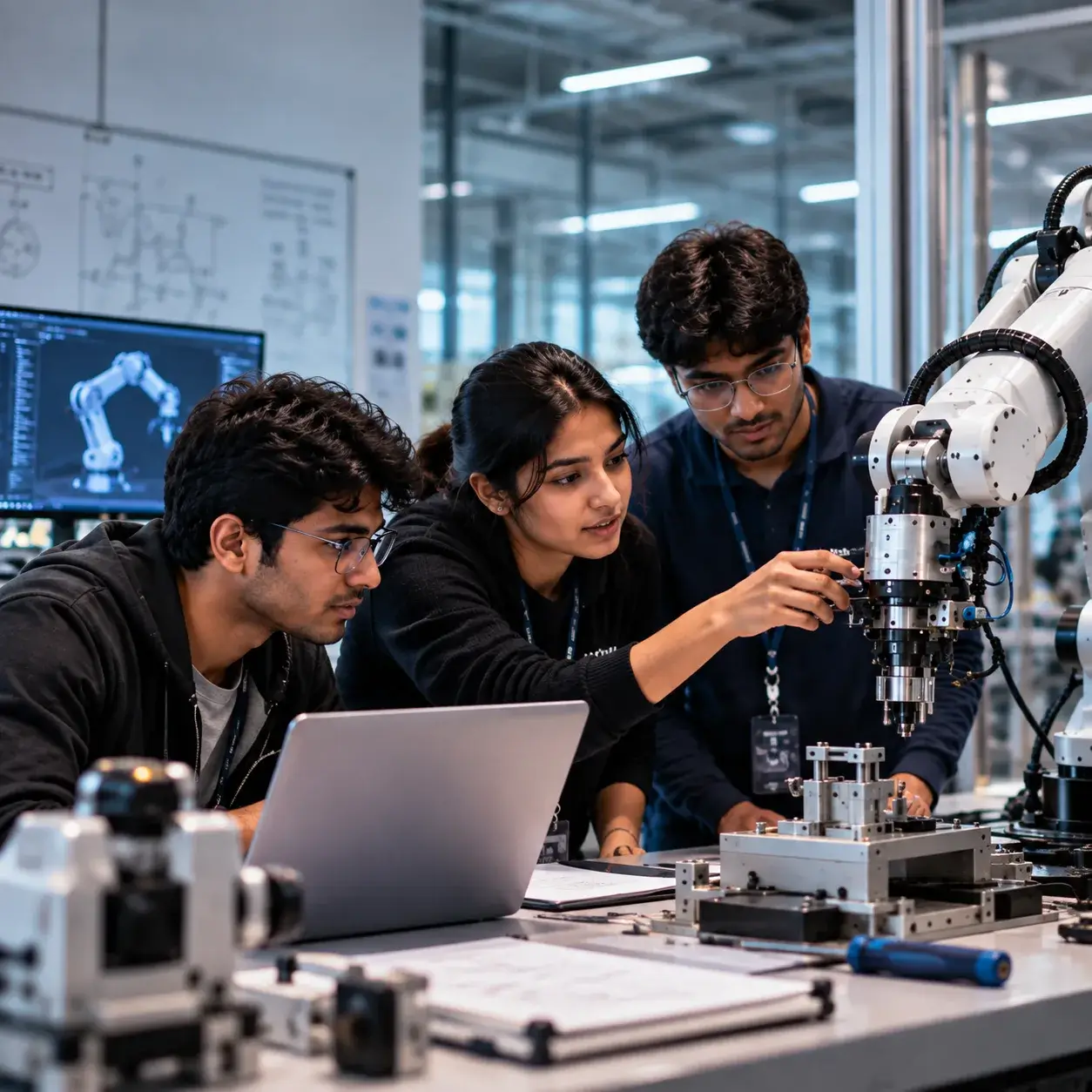
The impact of Industry 4.0 becomes clearer when we look at where these technologies are being deployed. Different industries are adopting robotics and automation for different reasons—some to improve precision, others to increase production capacity, strengthen quality control or manage increasingly complex manufacturing processes. For students pursuing B.Tech in Robotics or exploring B.Tech Robotics and Automation, understanding these sector-specific applications can provide a clearer picture of where their skills may be applied.
Automotive: Moving Towards Smarter Manufacturing
The automotive sector has been one of the strongest adopters of industrial robotics in India. Robots are used across welding, painting, assembly, material handling and inspection, particularly where processes demand consistency and precision.
The shift towards electric vehicles is also changing the nature of automotive manufacturing. Battery systems, electronics, sensors and software are becoming increasingly important components of the vehicle ecosystem. This creates opportunities for engineers who can work across robotics, automation, embedded systems, electronics and AI rather than focusing on mechanical production alone.
Pharmaceuticals: Where Precision and Consistency Matter
Pharmaceutical manufacturing presents a different use case for robotics. Here, automation is closely linked to accuracy, hygiene, consistency and quality control.
Robotic systems can support packaging, material handling, inspection and other repetitive processes in controlled manufacturing environments. For students pursuing B.Tech Robotics and Artificial Intelligence, this sector also demonstrates how robotics can intersect with computer vision, data systems and intelligent quality-control processes.
Electronics: Automation at a Smaller Scale
Electronics manufacturing requires high levels of precision, particularly as components become smaller and production volumes increase. Automated assembly, inspection and material handling can help manufacturers maintain consistency while scaling production.
This is creating demand for engineers who understand robotics alongside electronics, embedded systems, computer vision and industrial automation. A robotics BTech graduate with exposure to these interconnected areas can therefore find applications beyond conventional factory-floor robotics.
These sectors illustrate an important characteristic of Industry 4.0: the same technology can solve very different problems depending on the industry. A robot used for automotive welding requires a different combination of skills from a vision-based inspection system used in electronics or an automated handling system used in pharmaceuticals.
For students, this makes industry exposure and multidisciplinary learning increasingly valuable. The goal is not simply to learn how a technology works, but to understand why a particular industry needs it and how engineers can adapt it to solve real operational problems.