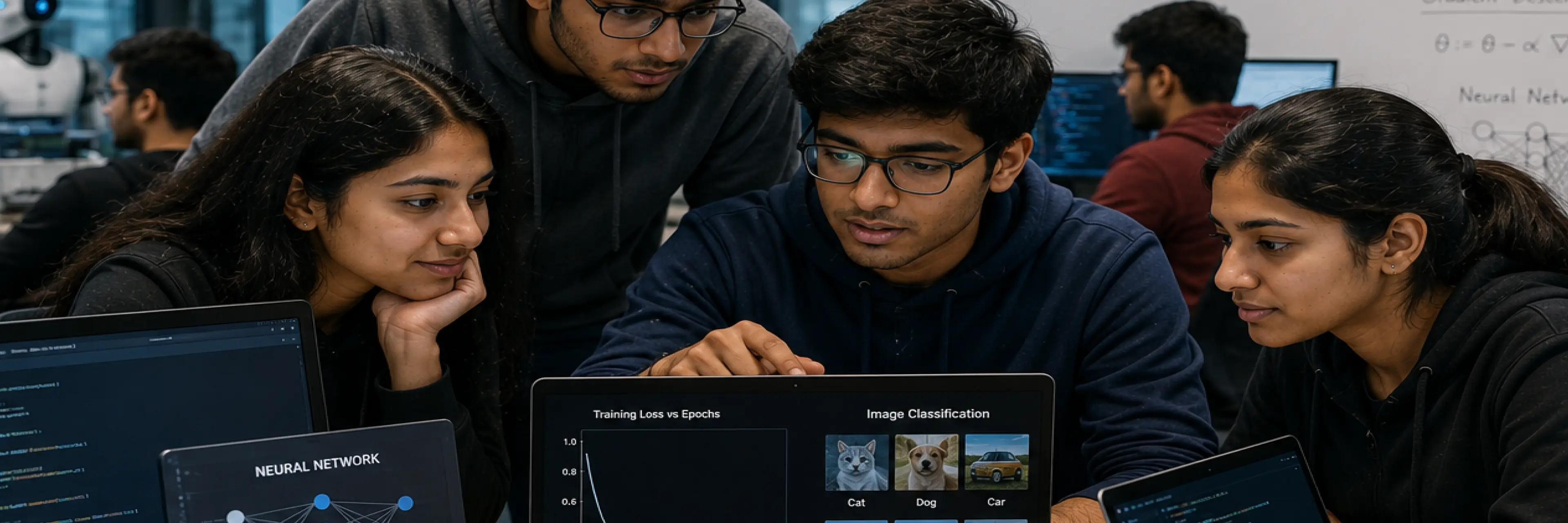
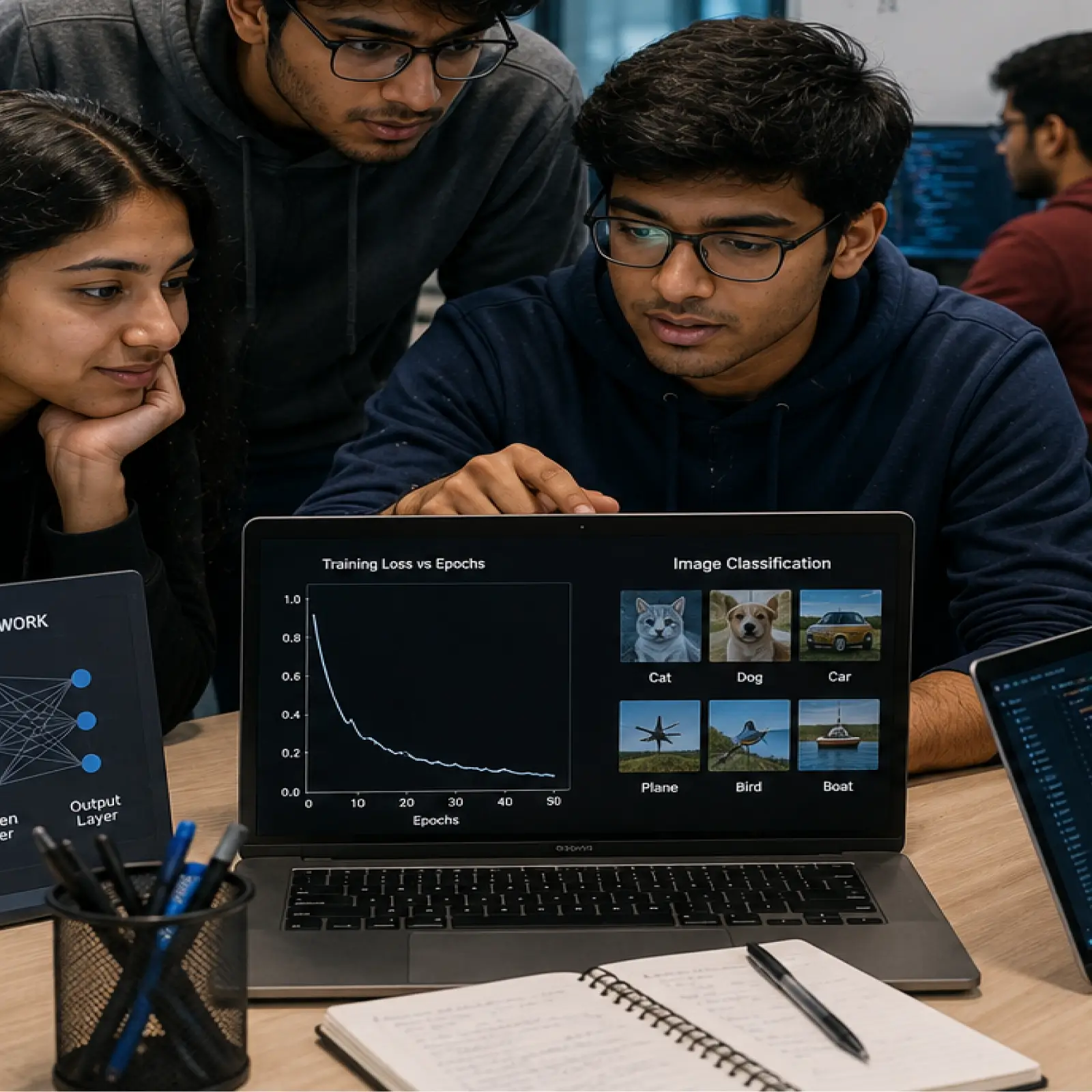
Artificial intelligence is evolving far too quickly for conventional classroom-based learning models to keep pace. In fields like machine learning, robotics, and intelligent automation, students are expected to understand not only theory, but also how technologies behave in dynamic, real-world environments. This is why modern engineering education is shifting toward a more immersive, industry-connected, and application-driven approach.
A future-focused B Tech Machine Learning program is no longer limited to lectures, coding assignments, and examinations. Instead, it focuses on helping students build practical problem-solving abilities, collaborative thinking, and innovation-driven mindsets that align with the changing demands of the technology industry.
Experiential Learning in B Tech Machine Learning Program
One of the biggest shifts in AI education is the emphasis on experiential learning. Students learn best when they actively build, test, experiment, and solve problems rather than only study concepts theoretically.
In programs like B Tech in AI and ML and B Tech Artificial Intelligence and Machine Learning, students are often exposed to hackathons, live projects, AI labs, simulations, prototype development, and research-based assignments. This allows them to understand how machine learning models function in practical settings and how intelligent systems are applied across industries. Hands-on learning also helps students develop adaptability. Since AI technologies evolve rapidly, the ability to experiment, iterate, and continuously learn becomes just as important as technical knowledge itself.
Industry Integration in B Tech Machine Learning
Modern engineering education is becoming increasingly aligned with industry ecosystems. Universities are recognizing that students need exposure to real business challenges, emerging technologies, and workplace expectations long before graduation.
This is why many B Tech Machine Learning and CSE AI and ML programs now integrate internships, mentorship opportunities, industry workshops, collaborative projects, and interactions with professionals working in AI-driven sectors. Such exposure helps students understand how machine learning is applied in areas like healthcare, finance, logistics, smart manufacturing, and digital platforms. It also bridges the gap between academic learning and industry requirements, making students more prepared for rapidly evolving career landscapes.
Interdisciplinary Thinking in BTech Machine Learning Education
AI does not function in isolation anymore. It intersects with robotics, automation, business systems, design, sustainability, and user experience. As a result, engineering education is becoming increasingly interdisciplinary.
Programs connected to B Tech Robotics and Automation, B Tech in Robotics, and B Tech Robotics and Artificial Intelligence often encourage students to work across domains and collaborate on solving real-world problems. Students learn how intelligent systems interact with machines, people, and environments rather than studying technology through a narrow lens. This approach also encourages innovation and entrepreneurial thinking. Students are motivated to identify problems, build solutions, and think creatively about how emerging technologies can create meaningful impact across industries and society.