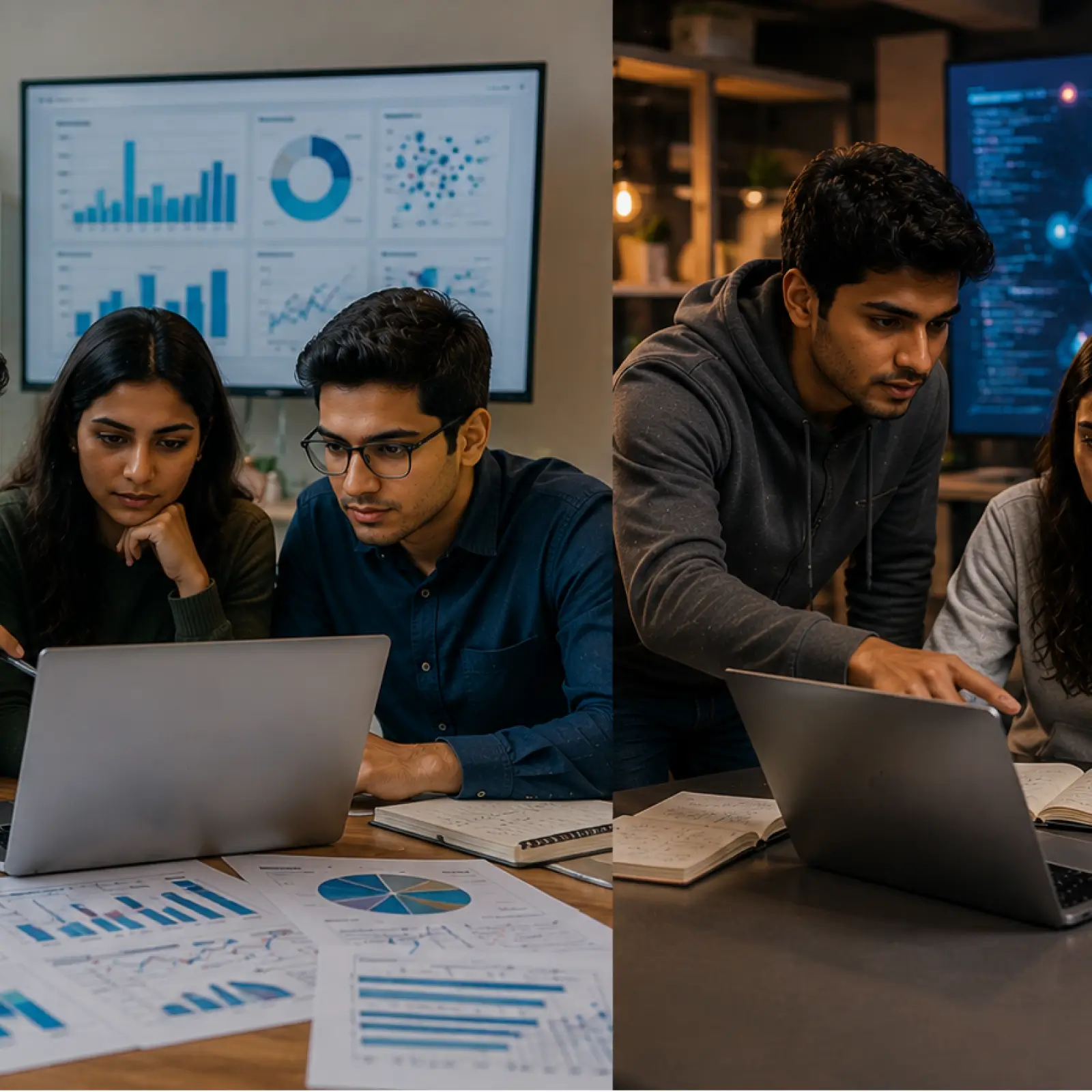
The rise of AI has fundamentally changed how businesses create value and, in turn, what they look for in talent. A decade ago, companies primarily hired for technical proficiency within clearly defined roles. Today, that model is shifting. Organizations are no longer looking only for graduates with degrees in engineering or computer science. They are increasingly seeking individuals who can work at the intersection of technology, analytics, and decision-making.
This shift reflects a deeper transformation in the modern economy: data has become foundational infrastructure, while intelligence has become a competitive advantage. Every industry today generates vast volumes of data, from customer interactions and financial transactions to operational workflows and behavioral signals. But raw data alone creates little value. Competitive advantage comes from the ability to interpret that data, uncover meaningful patterns, and translate insights into faster, smarter decisions.
This is where both data science and machine learning become indispensable. Data science enables organizations to make sense of complexity. It helps uncover patterns, identify trends, and answer critical business questions such as what is happening, why it is happening, and what may happen next.
Machine learning builds on that foundation by enabling systems to learn from data and improve their performance over time. Instead of simply analyzing information, machine learning allows systems to recognize patterns, make predictions, and automate decisions at scale. In practice, businesses increasingly need both capabilities. They need professionals who can interpret data with analytical depth, but also those who can build intelligent systems that continuously learn and adapt.
As a result, hiring is becoming both more specialized and more interdisciplinary. Employers increasingly value skills such as:
This is why the conversation around data science vs machine learning matters. The choice is no longer just about selecting a degree specialization. It is about understanding where you want to contribute in an economy where data powers decisions and intelligence drives innovation.