
















B.Tech in Quantum Technology

Build the quantum systems that will power the next era of computing.
Next Cohort
July 2027
Format
4 Years, Full time

The ATLAS uGDX B.Tech Experience

The B.Tech programs in ATLAS immerses you in technology from day one - through hands-on coding, real-world projects, and industry-integrated learning that build the skills to innovate and lead in the digital world.
  • Multidisciplinary
    Tech Education
    Learn AI/ML alongside electives in design and management, applying your skills through a semester-long internship.
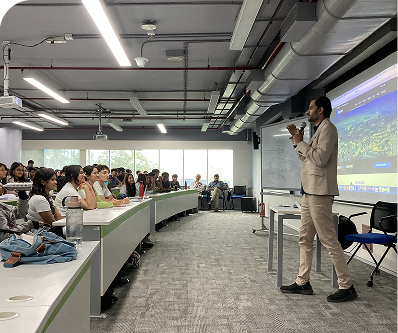
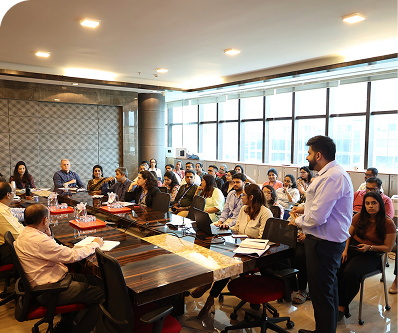
  • Master classes by industry leaders
    Learn directly from global technology experts, CTOs, and industry innovators.
  • NEP 2020
    Integrated
    Hundreds of hours of coding practice and training to master writing clean, scalable code.
  • Experiential &
    Hands-on learning
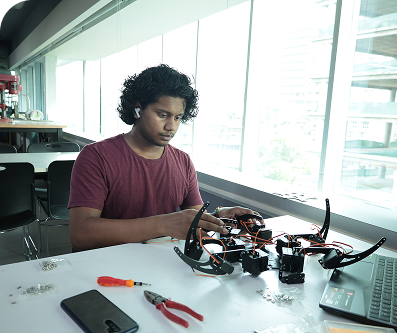
    Apply classroom concepts to live projects and real-world problem solving.
  • Curriculum co-created with industry
    Study a curriculum designed with leading CTOs to stay aligned with industry needs.
  • Entrepreneurship hub
    Get mentorship and support from Venture Labs to build and launch your own tech startup.
  • Urban campus experience
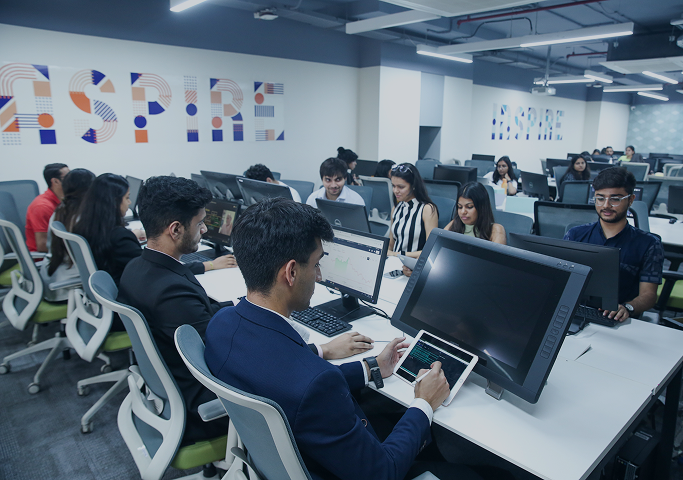
    Thrive in a modern, high-tech learning environment with state-of-the-art infrastructure.
  • Career services
    Apply classroom concepts to live projects and real-world problem solving.

Why Choose B.Tech in Quantum Technology at ATLAS uGDX

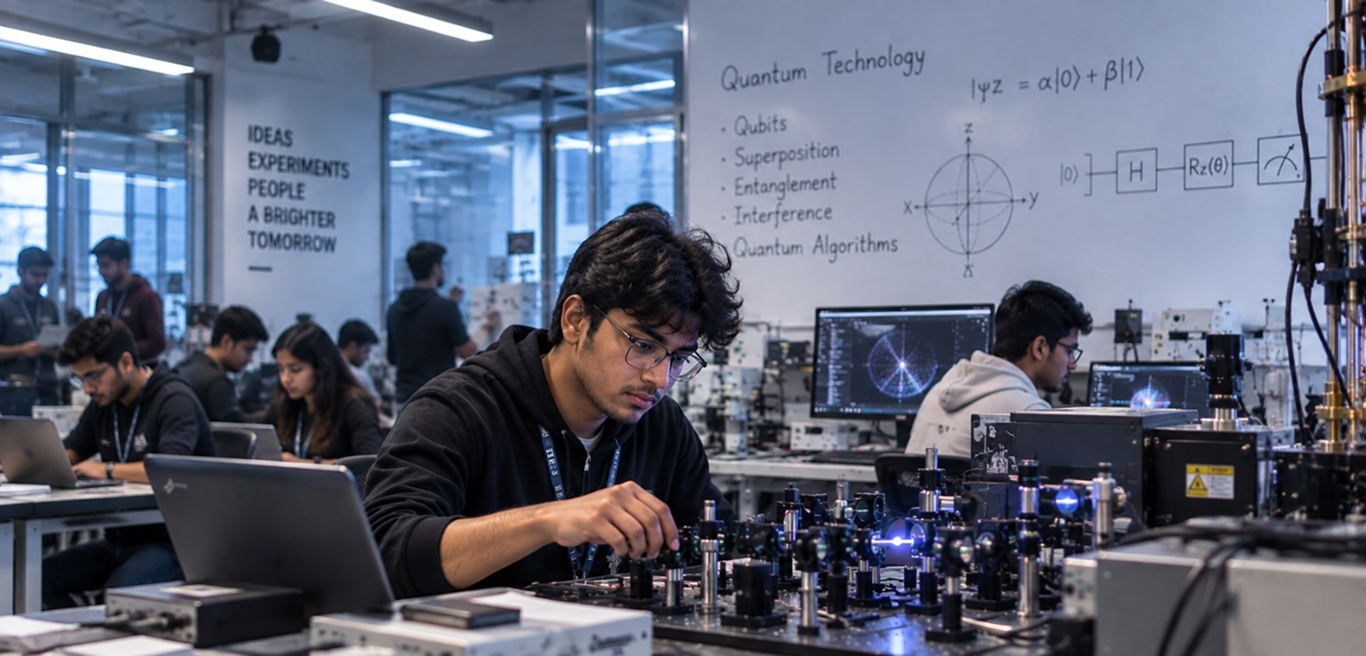
Quantum Computing on Real Hardware

Unlike typical engineering programs, students write and run quantum programs on real cloud quantum processors using Qiskit, Cirq and PennyLane — not just simulators.
01

Aligned with India's National Quantum Mission

The program is built around the talent needs of India's National Quantum Mission, preparing you for quantum computing, communication, sensing and materials research.
02

Three Specialisation Tracks

In Year 4, specialise in Quantum Computing & Quantum AI, Quantum Devices & Sensing, or Quantum Communication & Cryptography — each supported by dedicated lab work.
03

Research Internships & Industry Mentorship

Work on live research through internships at quantum labs, research institutions and startups, with industry mentors guiding your capstone project.
04

Global Exposure to Quantum Policy & Ethics

Through the ATLAS Global Week and international faculty exchange, explore quantum-safe security, the geopolitics of quantum technology and responsible innovation.
05

A Curriculum Designed for the Future

Built on the ‘Goal for Each Term’ (GET) philosophy, our curriculum ensures every semester has a clear, outcome-driven focus; continuously evolving with emerging technology trends and the learning needs of our students.

Semester 1

Building the Quantum Foundation
The first semester builds the language of physics, mathematics and computing. Students learn core mathematics, classical physics and programming while getting their first look at how quantum technology is changing the world.
Engineering Mathematics I
Covers calculus, linear algebra and differential equations, the mathematical backbone of quantum mechanics.
Classical Mechanics & Electromagnetism
Builds a strong physics foundation in motion, fields and waves through theory and lab work.
Introduction to Quantum Technology
Explores qubits, superposition and entanglement, and how they power quantum computers, sensors and secure networks.
Introduction to Programming
Python & C++ — Develops programming and problem-solving skills through hands-on coding exercises.
Digital Logic & Circuits
Explains how binary logic and circuits form the basis of classical computing hardware.
Communication Skills for Quantum Engineers
Builds presentation, writing and collaboration skills to explain complex technology clearly.
Multidisciplinary Elective I
Broaden your worldview with a course in AI, biology or policy.
Environmental Studies
Introduces sustainability and environmental responsibility in engineering.

Semester 2

Entering the Quantum World
This semester introduces quantum mechanics and the mathematical methods behind it. Students move from classical thinking to wavefunctions, probability and algorithms designed for quantum computing.
Engineering Mathematics II
Covers complex analysis, partial differential equations and Fourier methods used across quantum physics.
Quantum Mechanics I
Introduces wavefunctions, operators and the Schrödinger equation through theory and lab work.
Discrete Mathematics & Probability Theory
Builds the logic, combinatorics and probability skills essential for quantum information.
Data Structures & Algorithms for Quantum Computing
Teaches efficient algorithm design as a foundation for quantum algorithms.
Electronic Devices & Semiconductor Fundamentals
Explains how semiconductors and electronic devices work, from transistors to chips.
Indian Knowledge Systems I
Explores India's heritage in mathematics and astronomical precision.
Multidisciplinary Elective II
Strengthen your multidisciplinary learning portfolio.

Program Outcomes

Design Quantum Algorithms & Software
Build and optimise quantum algorithms using Qiskit and cloud quantum hardware to solve complex problems.
Engineer Quantum Hardware
Characterise, calibrate and operate qubit platforms, cryogenic systems and quantum devices.
Secure the Quantum Future
Design quantum key distribution systems and implement post-quantum cryptography to protect critical data.
Build Precision Quantum Sensors
Develop quantum sensors and metrology systems for navigation, defence, healthcare and science.
Integrate Multidisciplinary Problem Solving
Blend physics, AI, engineering and design thinking to create real world quantum solutions.
Lead India's Quantum Innovation
Drive research, entrepreneurship and innovation aligned with India's National Quantum Mission.

Ready to Build What’s Next?Let’s Get Started.

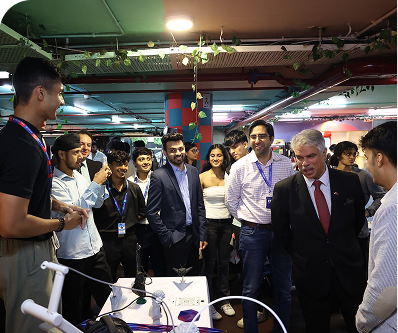
Get a glimpse - where future engineers and innovators areshaped through technology, industry, and inspiration.

Career Pathways

Explore diverse career pathways across quantum computing, communication and sensing.

Your guide to joining B.Tech in Quantum Technology at ATLAS uGDX

01
Fill the online Application Form
Apply for July 2027 Intake
02
uGDX Challenge
03
Personal Interview
04
Result
Announcement
05
Complete
Enrolment
Eligibility
    Indian Boards (ISC / CBSE / State Boards)
    Minimum 50% in Class XII
    Mathematics and Physics are mandatory

    A-Levels (UK)
    Minimum grades A/B/C in 2 subjects
    Grade B or above in Mathematics.
    Mathematics and Physics are mandatory

    International Baccalaureate (IB)
    Minimum of 24 points in 3 HL & 3 SL subjects
    Mathematics and Physics are mandatory
    Application Fee: ₹3,500
    After selection, the enrolment fee of ₹50,000 to secure your seat is Nonrefundable!
    Fee Structure
    We believe in clarity. Here’s a simple year-on-year breakdown of our fees!
    Loans & Scholarships
    That’s right – Funding just got easier! We partner with India’s top banks to support your journey to success. And, our ATLAS Scholarship is there to enable access to world-class education and lifelong growth.
    More questions?
    Let our AI Assistant answer your queries

    Questions? We can read your mind

    The program focuses on how quantum physics is used to build new technologies — quantum computers, quantum communication networks and ultra-precise quantum sensors. Students learn quantum mechanics, quantum programming, hardware engineering and quantum-safe security.

    Yes. Through the National Quantum Mission, India is investing in quantum computers, secure quantum communication networks and quantum sensors, which creates strong demand for trained quantum engineers across research, defence, industry and startups.

    Students who enjoy physics and mathematics, are curious about how the universe works at its smallest scale, and want to build cutting-edge technology will find this program a great fit.

    Students need a minimum of 50% in Class XII (ISC / CBSE / State Boards) with Mathematics and Physics, or equivalent A-Level or IB qualifications. See the eligibility section above for details.

    Admission is through the uGDX Challenge followed by a personal interview. Complete the online application form to get started.

    Core subjects include engineering mathematics, quantum mechanics, quantum information theory, quantum programming, quantum algorithms, quantum hardware, quantum cryptography, quantum sensing and quantum networking.

    A strong interest in physics and mathematics helps. The first year builds your foundations step by step, so you don't need any prior knowledge of quantum mechanics.

    Yes. From Year 2, students program and run circuits on cloud-based quantum computers using industry frameworks such as Qiskit, Cirq and PennyLane.

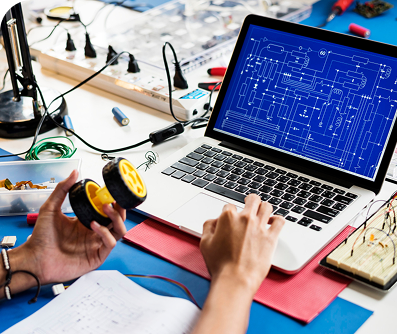
    Yes. The program includes programming, optics and photonics, cryogenics, quantum hardware and cloud quantum computing labs, along with project-based learning every semester.

    In Year 4, students choose one of three tracks: Quantum Computing & Quantum AI, Quantum Devices & Sensing, or Quantum Communication & Cryptography.

    Yes. Students complete a summer internship in Year 3 and a research internship or lab rotation in Year 4, followed by a capstone project or research thesis.

    Graduates can work as Quantum Software Engineers, Quantum Algorithm Researchers, Quantum Hardware Engineers, Quantum Cryptography Engineers, Quantum Sensing Scientists and Quantum ML Researchers, or start their own quantum ventures.

    Yes. Graduates are well prepared for M.Tech, MS and PhD programs in quantum science and engineering at leading Indian and international universities.

    Yes. The ATLAS career services team supports students with internships, industry connections and placement opportunities across the quantum and deep-tech ecosystem.

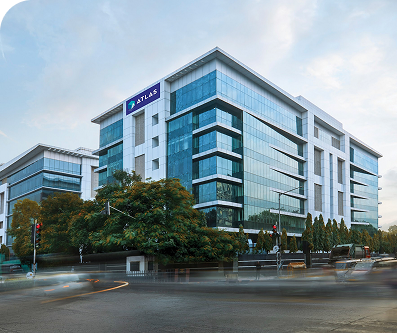
    The campus is located at Equinox Business Park, Bandra-Kurla Complex (BKC), Kurla West, Mumbai, with modern classrooms, labs and collaborative learning spaces.

    It is a 4-year, full-time program spread across 8 semesters.