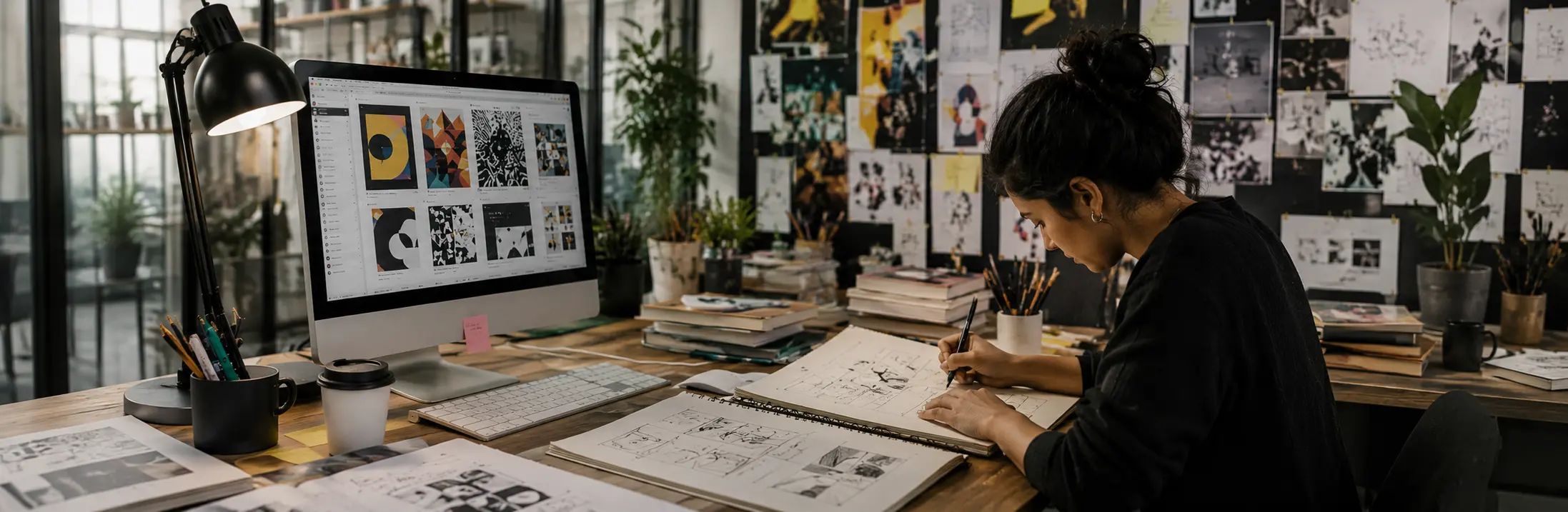
Every major technological shift has raised one fundamental question: What happens to human creativity when machines become capable of creating?
From the rise of photography to digital design tools, every new technology has changed the way creators work. Today, artificial intelligence is bringing a similar transformation to the design world. With AI tools capable of generating visuals, layouts, illustrations, and creative concepts within seconds, designers are rethinking their role in the creative process.
But the real question is not whether AI can create. It is who decides what is worth creating?
Design has always been more than producing something visually appealing. It involves understanding people, interpreting emotions, considering cultural contexts, and solving communication challenges. While AI can generate multiple design possibilities, it does not understand human experiences or the purpose behind a design unless guided by a person.
The growth of AI in design is not about replacing creativity. It is about changing how designers approach their work. AI can help creators explore ideas faster, experiment with different possibilities, and reduce repetitive tasks. But the intent, direction, and final decisions will continue to come from human designers.
AI follows the path humans create for it. The quality of an AI-generated design depends on the designer's ability to provide meaningful inputs, evaluate outcomes, and add creative judgement. It works best as a collaborator, not as a replacement for human imagination.
However, overdependence on AI can impact creativity. If designers rely only on generated outputs, they may skip the process of observation, experimentation, and original thinking that leads to meaningful design. Creativity grows through curiosity and human experiences, not just instant results.
This makes design education more important than ever. Students pursuing a B Des communication design degree need to understand how to balance creative thinking with emerging technologies. The future designer will not compete with AI but learn how to guide it, question it, and use it to create more impactful work.
For students exploring communication design courses in India, the focus is shifting from simply learning design tools to developing strategic thinking, storytelling skills, and the ability to use technology with purpose. The future of design will be shaped by those who can combine human creativity with the possibilities of AI.