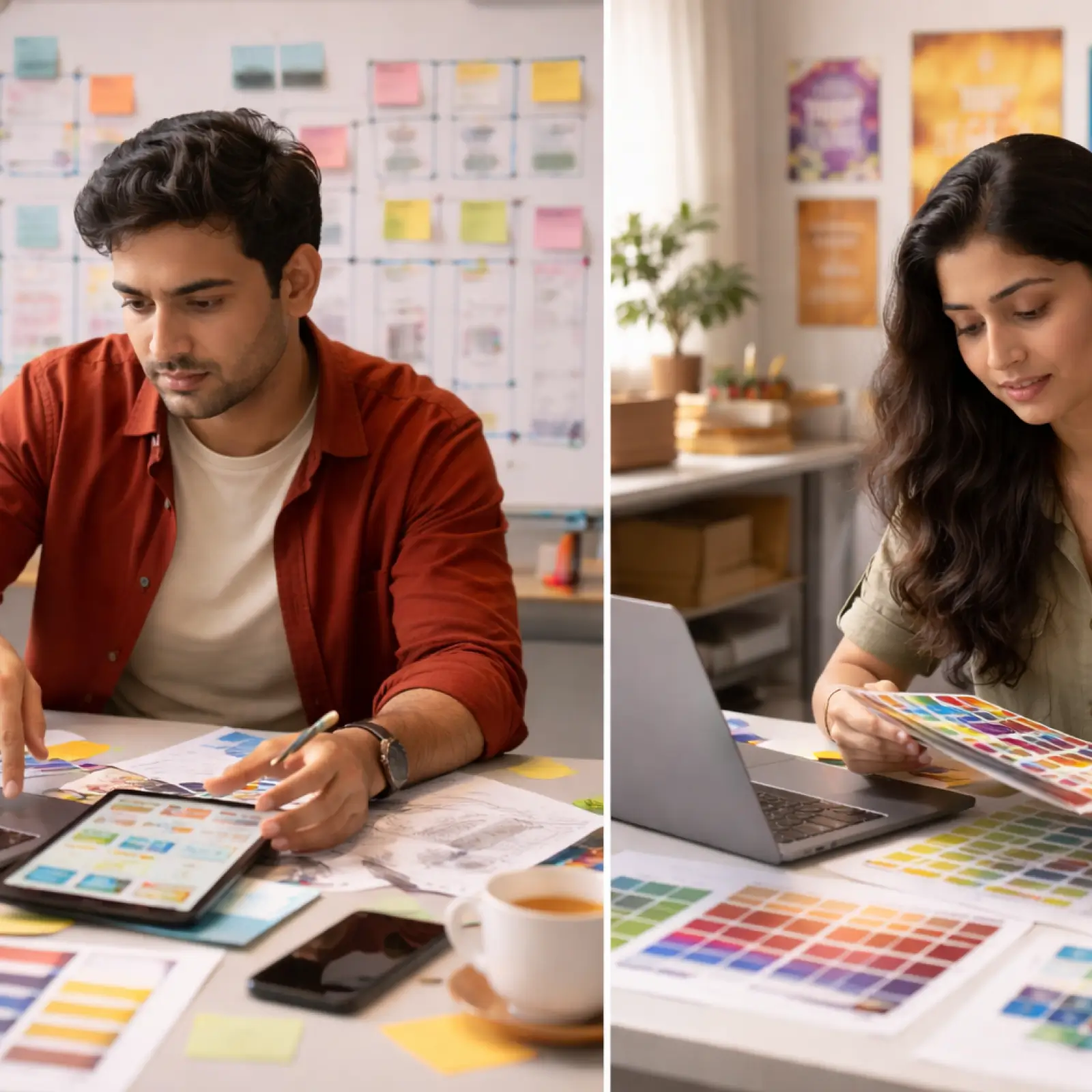
The difference between communication design and graphic design becomes much clearer inside the classroom. Not in theory, but in how you are taught to approach a brief, how projects are structured, and what is expected from you by the end of a semester.
In many b des in communication design colleges, learning is built around exploration and problem-solving rather than just execution. A typical project does not begin with "design a poster" or "create a logo." It often starts with a broader question. Who are you communicating with? What is the context? What behaviour or response are you trying to influence?
From there, the process unfolds in layers. Students research, define the problem, map user journeys, and then begin translating those insights into design outcomes. The work may move across formats. A single brief could involve branding, digital interfaces, motion elements, and storytelling. This is why programs like b des in communication design, b des visual communication, or even bsc communication design tend to feel more interdisciplinary. They combine research, strategy, and execution into one continuous process.
There is also a strong emphasis on studio-based learning. Feedback loops, critique sessions, and collaborative projects are central to the experience. You are not just evaluated on the final output, but on how you think, how you iterate, and how well your solution responds to the problem.
In contrast, a b des graphic design or bachelor's in graphic designing program is often more focused on building visual expertise and craft. The structure is usually more direct. You are given a brief, and the emphasis is on how well you execute it.
Students spend a significant amount of time developing core design skills. Typography, layout, colour theory, composition, and software proficiency become the foundation. Projects may centre around creating brand identities, editorial layouts, packaging, or campaign visuals. The goal is to build a strong, polished portfolio that demonstrates visual clarity and creative ability.
This approach is not narrower, just more focused. It sharpens your ability to create compelling visuals and communicate effectively through form.
What is interesting is how some newer institutions are beginning to bridge this gap. At places like ATLAS SkillTech University, the learning model reflects how design actually works in the real world. Students are exposed to interdisciplinary projects where communication, business thinking, and technology intersect. A visual communication degree here is not treated as an isolated creative pursuit, but as part of a larger ecosystem that includes user experience, branding, and even entrepreneurship.
This kind of environment changes how students learn. Instead of choosing between thinking and making, they are encouraged to do both. And that, increasingly, is what the industry expects.