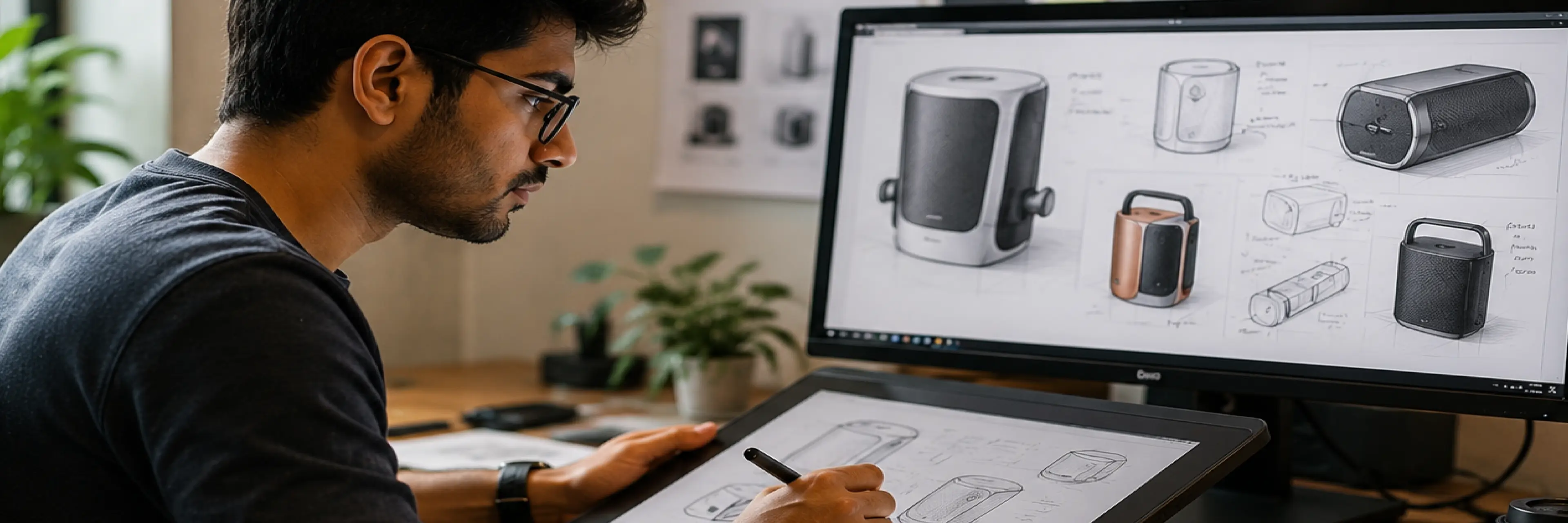
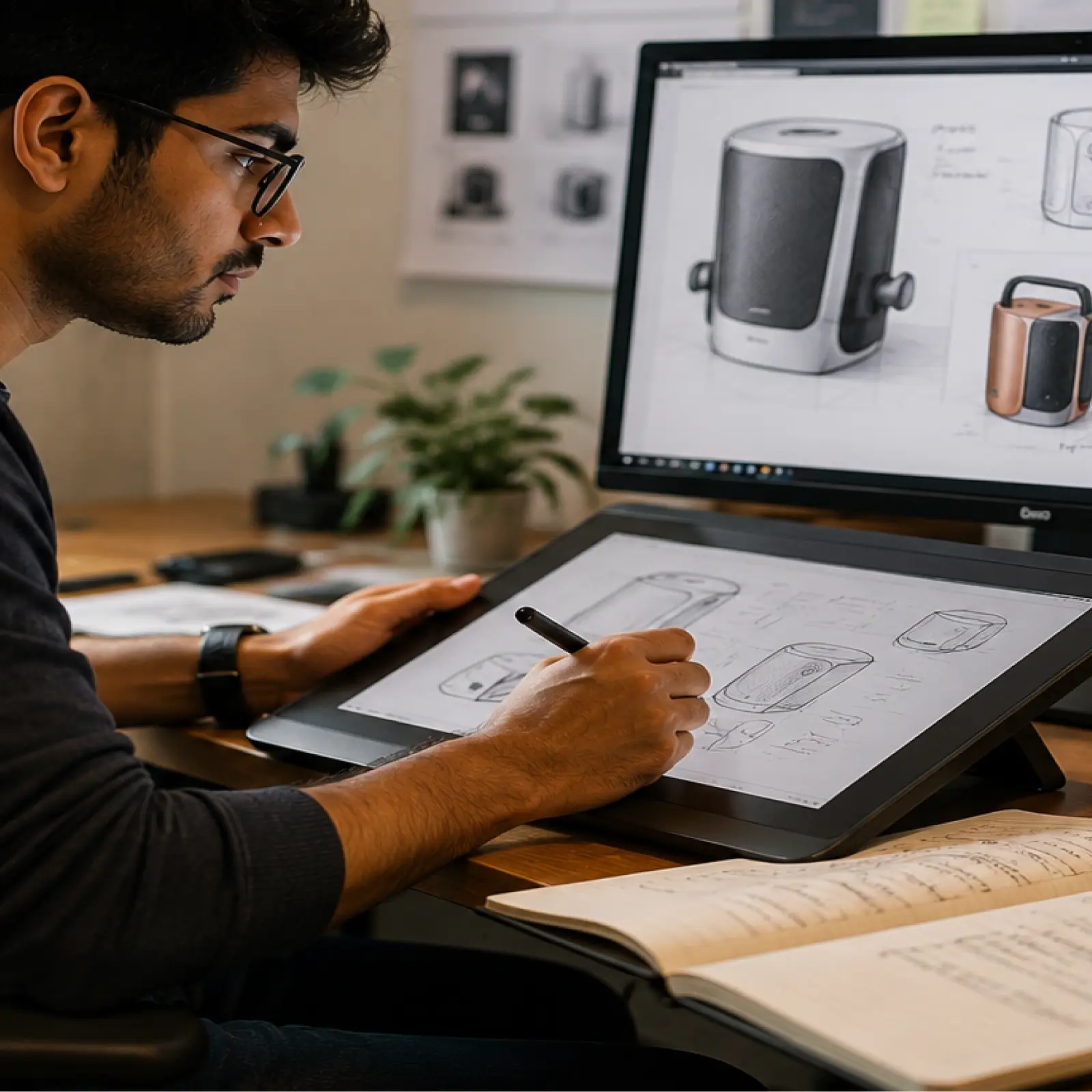
There is no fixed template for a product designer's day, and that is exactly what makes the role interesting. It is not a job that runs on repetition. It runs on problems, and problems rarely arrive in a predictable order. Some days begin with clarity and direction, others begin with ambiguity that needs to be untangled before any design work can even start.
B Des Product Design Starts: Signals, Not Solutions
A product designer's day rarely begins with design. It begins with information. This could be user feedback, product analytics, customer support issues, or insights shared by the product team. But this data is never taken at face value. The first job is to understand patterns, not jump to conclusions. If users are dropping off at a specific step, or if a feature is being ignored, the question is not "how do we fix this immediately," but "what is actually causing this behavior." This shift in mindset is important because it sets the tone for everything that follows. Good product design starts with framing the right problem, not rushing toward a solution.
Understanding Users: A Core B Des Product Design Skill
Once the problem space is clearer, designers move deeper into user understanding. This is where research becomes central. It may involve interviews, usability testing, journey mapping, or reviewing how users interact with a product in real time.
What makes this stage interesting is that users rarely explain problems directly. They describe experiences, frustrations, or workarounds. A product designer's job is to interpret these signals and connect them to underlying needs. Often, what users think is the problem is only a symptom of something deeper in the system. This is also where structured learning pathways like a b des product design or bachelor of design product design become valuable, because they train students to approach user behavior as something to study, not assume.
Exploring Ideas Without Committing too Early
After insights start taking shape, the work moves into exploration. This is not about final designs. It is about testing directions quickly and cheaply. Designers sketch multiple ideas, build wireframes, and create prototypes that help answer specific questions. Will this flow reduce friction? Does this layout improve clarity? Where do users hesitate?
The key here is not perfection. It is the speed of learning. Each version is meant to reduce uncertainty, not finalize the product. This mindset is also central to how to be a product designer. You are constantly iterating, not aiming for a single correct answer on the first attempt.
Collaboration That Reshapes The B Des Product Design Role
As ideas mature, collaboration becomes the dominant part of the day. Product designers work closely with engineers, product managers, and sometimes business teams to evaluate feasibility, priority, and impact. This stage often changes the design more than the earlier exploration phase. Technical constraints may simplify a flow. Business priorities may shift emphasis. Engineering inputs may reshape how something is built.
Rather than seeing this as compromise, product designers learn to treat it as refinement. Real-world products are always shaped by multiple perspectives. This is why interdisciplinary education in programs like b des product design or ba product design matters. Students learn early that design is never a solo process.
A cycle, Not a Sequence
What defines a product designer's day is not a fixed order of tasks. It is a loop. Research leads to design. Design leads to testing. Testing leads back to research. And the cycle continues. A single day can move through all these stages or stay deep in just one. That flexibility is not chaos. It is the nature of working with complex human problems.
As products become more digital, connected, and data-driven, the role of a product designer is expanding beyond execution. It now influences how products are shaped at a strategic level.
And that is exactly why strong foundational programs like a bachelor of design product design are gaining importance. They prepare students not just to design interfaces, but to think in systems, understand behavior, and work across disciplines.
In many ways, product design today is less about producing output and more about guiding decisions.