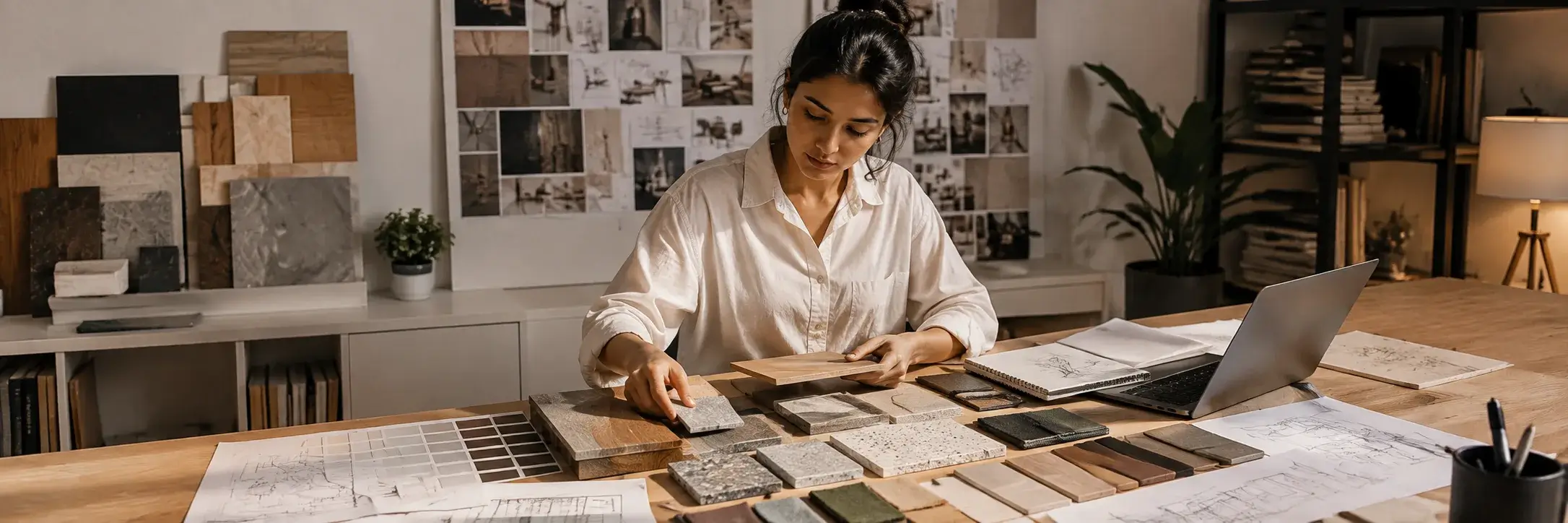
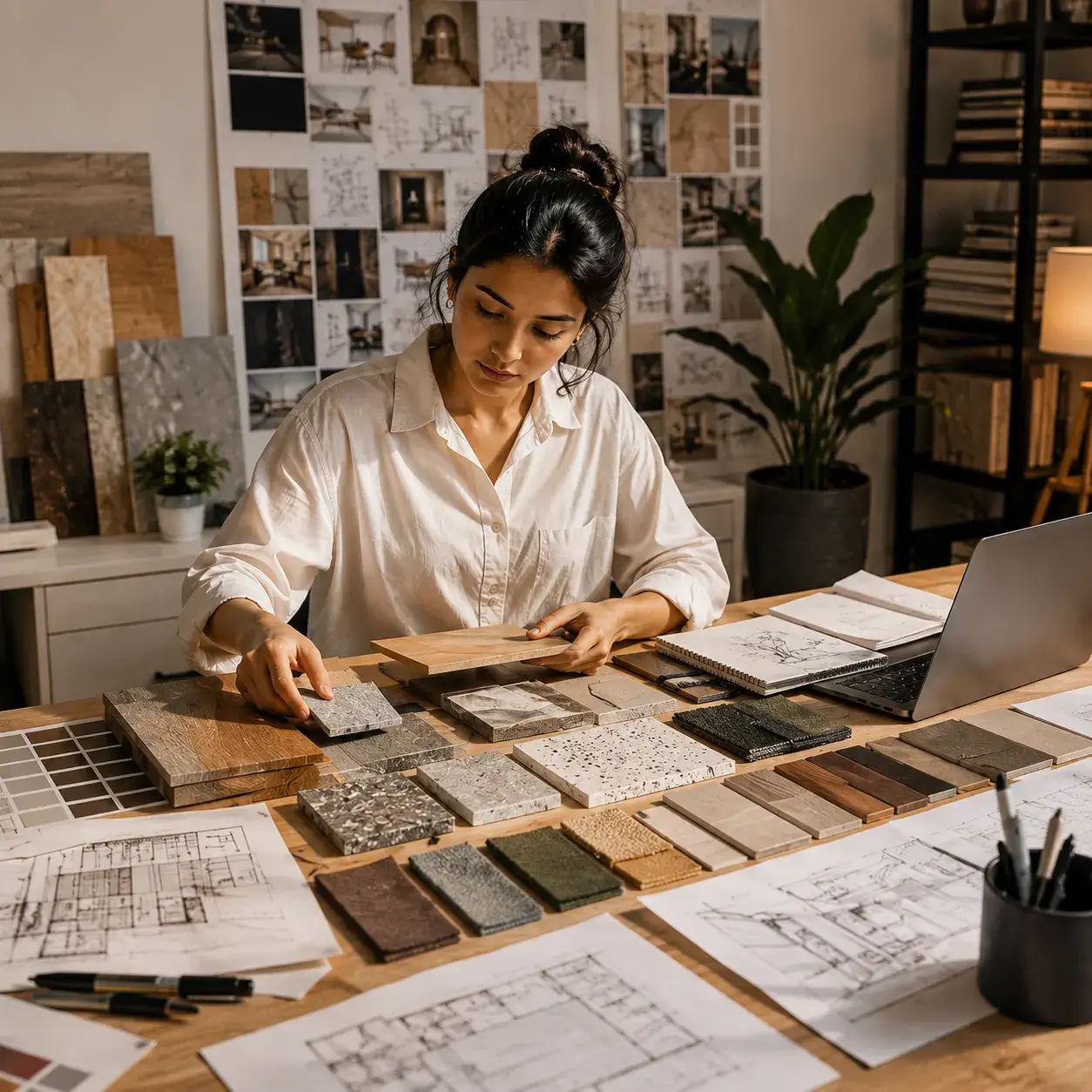
An interior design styles list can help students understand the visual language of different spaces, but style is not created by colour or furniture alone. Materials play a major role in establishing the character of an interior. The same room can feel warm, industrial, understated or luxurious depending on the surfaces, textures and finishes used. For a design student, the more useful exercise is to understand why certain materials support a particular design approach rather than simply reproducing a familiar style.
Minimalism: How Materials for Interior Design Define a Minimalist Space
Minimalist interiors often rely on a restrained palette, clean forms and limited visual clutter. This makes the quality of the material particularly important. Natural wood, stone, concrete, glass and muted finishes can create visual interest without adding unnecessary decoration. Here, the grain of timber, texture of stone or subtle variation in a plaster finish can become part of the design instead of being hidden beneath layers of ornamentation.
Industrial Style: Materials for Interior Design That Celebrate Rawness
Industrial interiors often draw from materials associated with construction and manufacturing. Exposed brick, concrete, steel, metal mesh and reclaimed wood can give a space a robust, unfinished quality. What makes the approach effective is not simply using these materials together, but allowing their inherent characteristics to remain visible. Joints, structural elements and signs of wear can become deliberate parts of the interior rather than details that need to be concealed.
Scandinavian Style: Interior Design Materials That Create Warmth
Scandinavian-inspired spaces typically use materials to create a sense of warmth while maintaining visual simplicity. Light-toned timber, natural textiles, wool, muted ceramics and soft finishes are commonly used to introduce texture without making the space feel heavy. The material palette works alongside natural light and simple forms, showing how material choices can influence comfort and atmosphere as much as appearance.
Biophilic Design: Natural Interior Design Materials and Their Role
In biophilic interiors, materials can help create a stronger connection between occupants and the natural world. Timber, stone, cork, bamboo, natural fibres and other tactile materials can introduce organic textures and variation. However, using natural materials alone does not make an interior biophilic. Their placement, relationship with daylight, vegetation, ventilation and the overall spatial experience also matter.
Contemporary Design: Combining Materials With Intention
Contemporary interiors are less restricted by a fixed material palette. Designers may combine natural stone with engineered surfaces, timber with metal, or glass with textured fabrics. The challenge is to create a sense of coherence despite the variety. This requires an understanding of proportion, texture, contrast and visual hierarchy rather than simply combining materials because they are individually attractive.
The larger lesson for students is that style should inform material selection, but it should not dictate it completely. Understanding the properties and possibilities of a material allows designers to interpret a style in a way that feels considered and relevant rather than copied from a reference image.