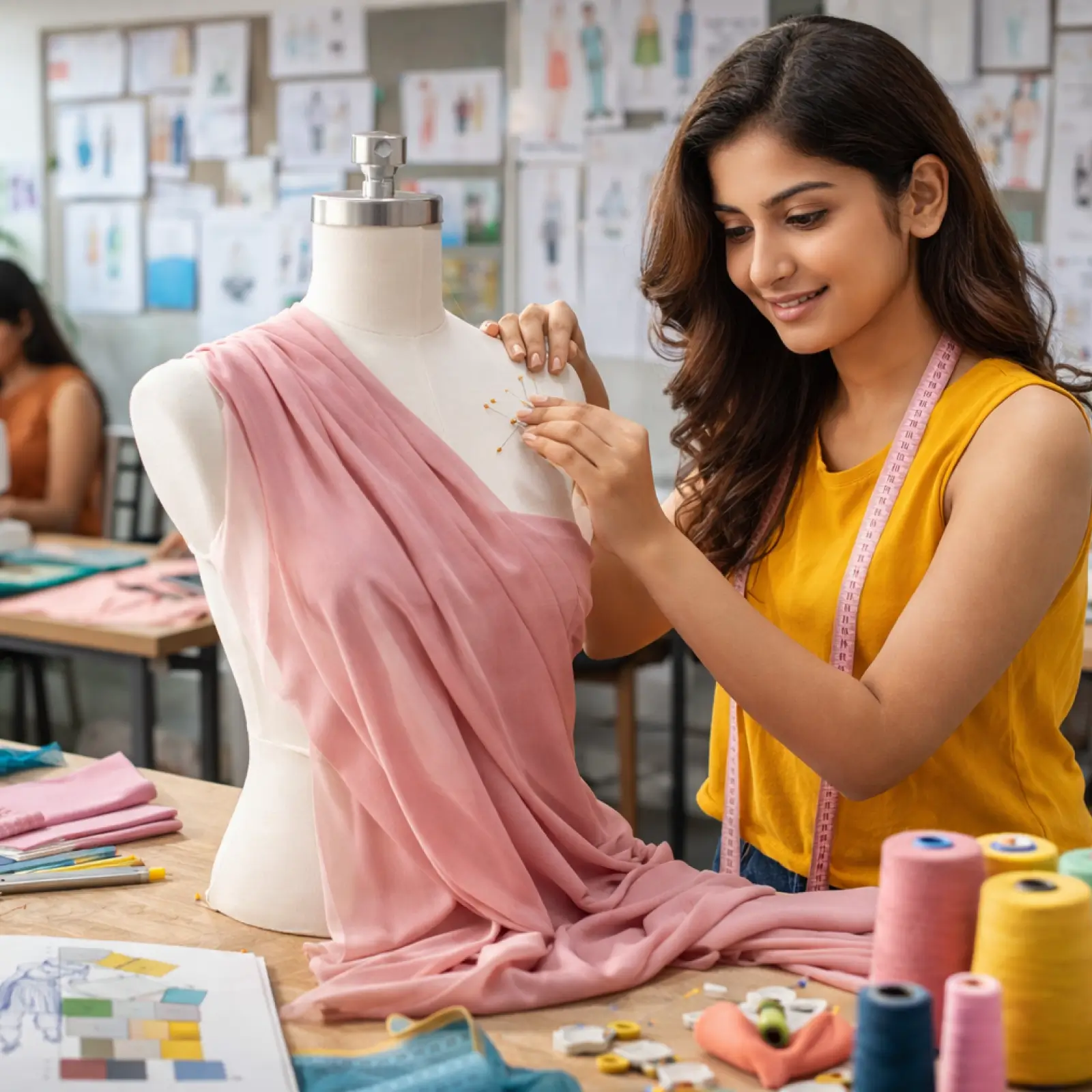
Let's address the elephant in the room. Most fashion institutions are still teaching students how the industry worked a decade ago, not how it functions today. Many fashion design schools continue to focus heavily on pattern-making and garment construction, treating them as the end goal rather than the foundation.
While these skills are still important, they are no longer enough on their own. The fashion industry has become faster, more digital, more data-driven, and far more interconnected. As a result, fashion studies today demand a multidisciplinary approach that blends creativity with technology, sustainability, and business intelligence. This is the shift separating outdated programs from future-ready bachelor degree offerings.
Technology Is No Longer Optional
The fashion design bachelor degree programs that truly matter have fully integrated technology into the design process. AI-assisted tools are now used to analyse consumer behaviour, predict trends, and reduce guesswork in design decisions. 3D visualisation software allows students to prototype garments digitally, cutting down on sampling costs and development time.
Blockchain technology is being introduced to help future designers understand supply chain transparency and ethical sourcing, both of which are becoming non-negotiable for global brands. AR and VR platforms are redefining how collections are showcased, making virtual fashion shows and digital showrooms industry norms. A modern fashion designing course must prepare students to design not just for the runway, but for digital ecosystems as well.
Sustainability Isn't a Buzzword — It's Business
A credible bsc fashion designing program today treats sustainability as a core business strategy, not an optional module. Students are trained in circular design principles, where garments are created with reuse, recycling, and longevity in mind. Zero-waste pattern cutting teaches designers how to minimise fabric waste at the design stage itself, directly impacting production efficiency.
Sustainable material innovation exposes students to alternatives such as bio-fabrics, recycled textiles, and low-impact dyes. Carbon footprint analysis helps future professionals understand the environmental cost of every design decision, from sourcing to shipping. This depth of learning ensures that graduates from strong best fashion schools can align creativity with responsibility and profitability.
Business Acumen Is Non-Negotiable
The era of the isolated designer is over. A future-focused bachelor of fashion design must equip students with the ability to think like brand builders and entrepreneurs. Understanding brand strategy and positioning helps designers create identities that resonate with specific markets rather than generic audiences. Digital marketing education ensures students know how to launch, grow, and communicate fashion brands across social platforms and marketplaces.
E-commerce operations training covers everything from online merchandising to customer experience and logistics. Financial management introduces students to costing, pricing, margins, and scaling, skills that determine whether a brand survives or fails. This is why the strongest fashion design degree programs blend creativity with commercial intelligence from day one.