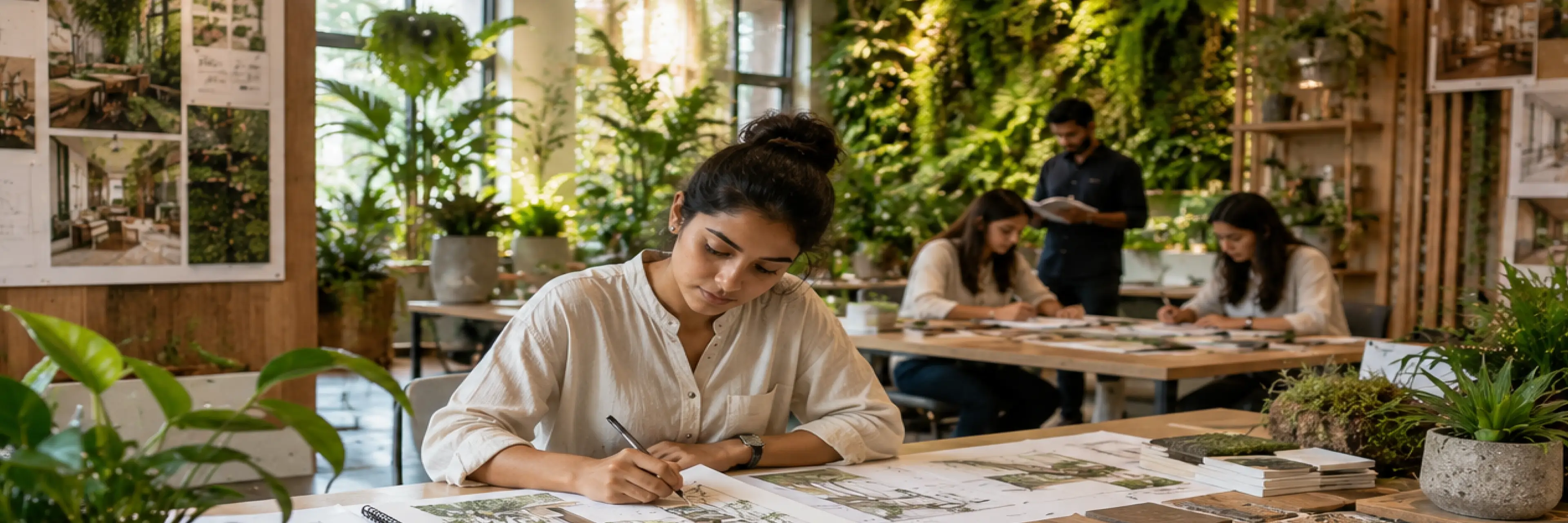
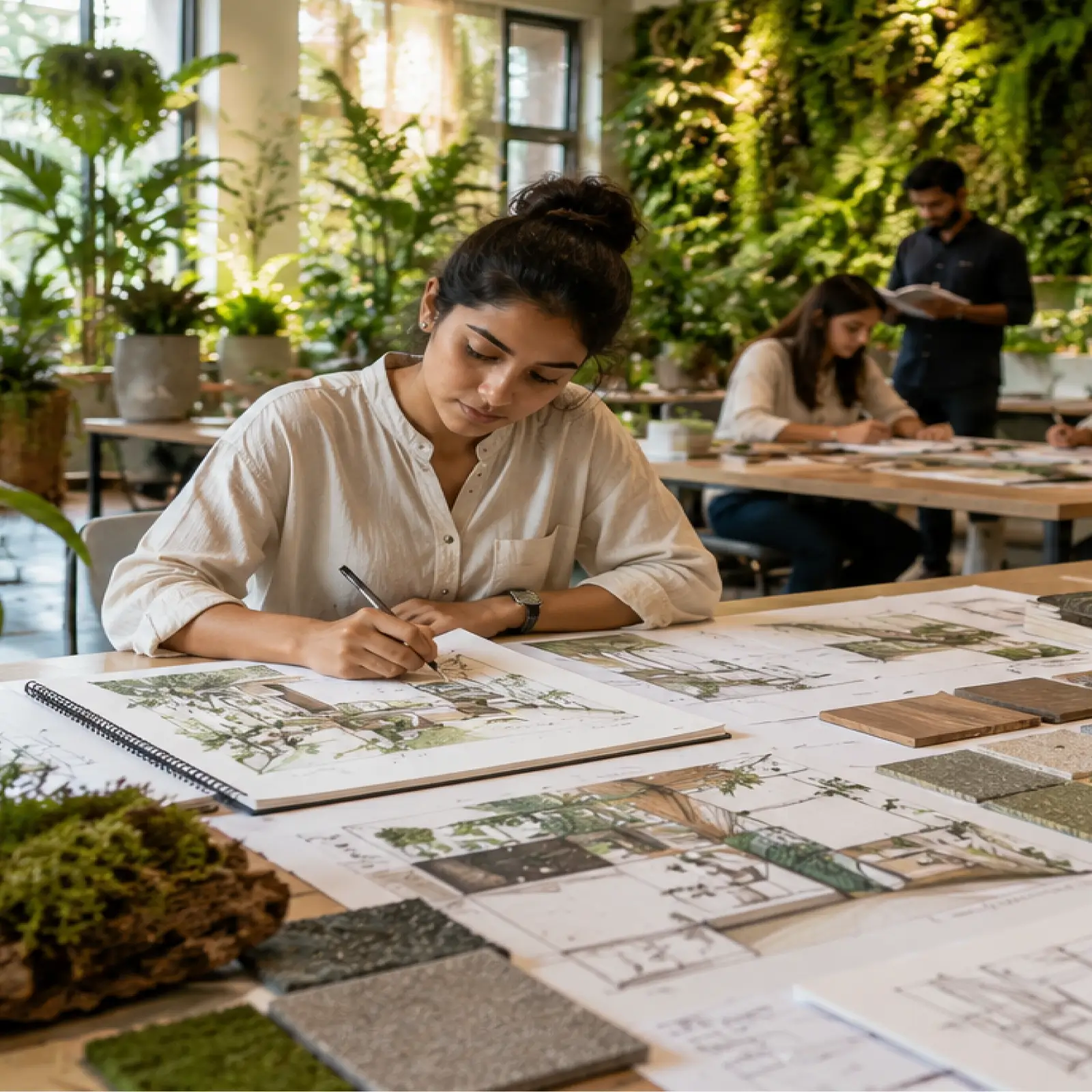
Interior design in 2026 is not being shaped by a single style movement or visual preference. It is being shaped by a deeper shift in how spaces are expected to behave. Across residential, commercial, and institutional environments, the focus is moving away from decoration and toward performance, experience, and adaptability. Within this larger shift, biophilic interior design is no longer treated as a niche idea. It is becoming a baseline reference point for how designers think about space, wellbeing, and human connection to the environment.
That evolution is not happening in one direction. It is unfolding through a few clear trajectories that are redefining how students and professionals approach design.
1. Biophilic Interior Design Is Moving from Visual Cues to Spatial Systems
Earlier interpretations of biophilic design often stayed at the surface level. Natural materials, indoor plants, and organic textures were used to create a sense of connection to nature. While these elements are still relevant, interior design trends 2026 show a deeper integration.
The focus is now on how entire spatial systems behave. This includes how daylight moves through a space, how ventilation supports comfort, how transitions between areas feel, and how users experience rhythm and openness throughout their movement. In other words, biophilia is no longer something added to a design. It is becoming part of how the design is structured from the beginning.
2. Technology Is Reshaping Biophilic Interior Design Experiences
A major shift in interior design programs is the increasing overlap between design and technology. Digital tools are now being used to replicate and enhance natural conditions inside built environments.
This includes adaptive lighting systems that follow circadian rhythms, material technologies that respond to temperature and light, and spatial simulations that help designers predict how people will experience a space before it is built. The result is a version of biophilic design that is not static. It changes through time, responding to both environmental conditions and human presence. For students in an interior design degree, this introduces a new layer of thinking where design is no longer fixed at completion. It continues to evolve after implementation.
3. Wellbeing as a Measurable Outcome in Interior Design Degree Projects
One of the most significant changes in interior design bachelor degree pathways is the growing emphasis on wellbeing as a design metric. Spaces are no longer judged only by efficiency or aesthetics. They are increasingly evaluated based on how they affect mental clarity, stress levels, productivity, and emotional comfort.
This is where biophilic thinking becomes especially relevant. Natural light, airflow, material tactility, and spatial openness are now studied in relation to human psychology and physiology. In practice, this means design decisions are increasingly expected to have a clear rationale linked to human wellbeing, not just visual intent.
4. Why Biophilic Interior Design Is Now Interdisciplinary by Default
Another clear direction in interior design trends 2026 is the breakdown of rigid disciplinary boundaries. Interior design is now closely linked with architecture, environmental science, behavioural psychology, and even data-driven design.
This is especially visible in advanced pathways like bachelor of architecture interior design, where spatial design is studied as both a structural and experiential discipline. Similarly, masters in interior design and interior design postgraduate programs are increasingly focused on research-led approaches that explore how environments influence human behaviour at scale.
A deeper shift is shaping it and designers no longer treat biophilic design as niche. It is becoming a shared language across disciplines, helping designers connect environmental systems with human experience in a more integrated way.
What ties all of these shifts together is a simple but important idea. Interior design is no longer about creating spaces that look complete. It is about creating environments that respond, adapt, and support the people who inhabit them. Biophilic thinking is becoming central to that transition, not as a trend, but as a long-term design framework shaping how future spaces will be conceived and experienced.