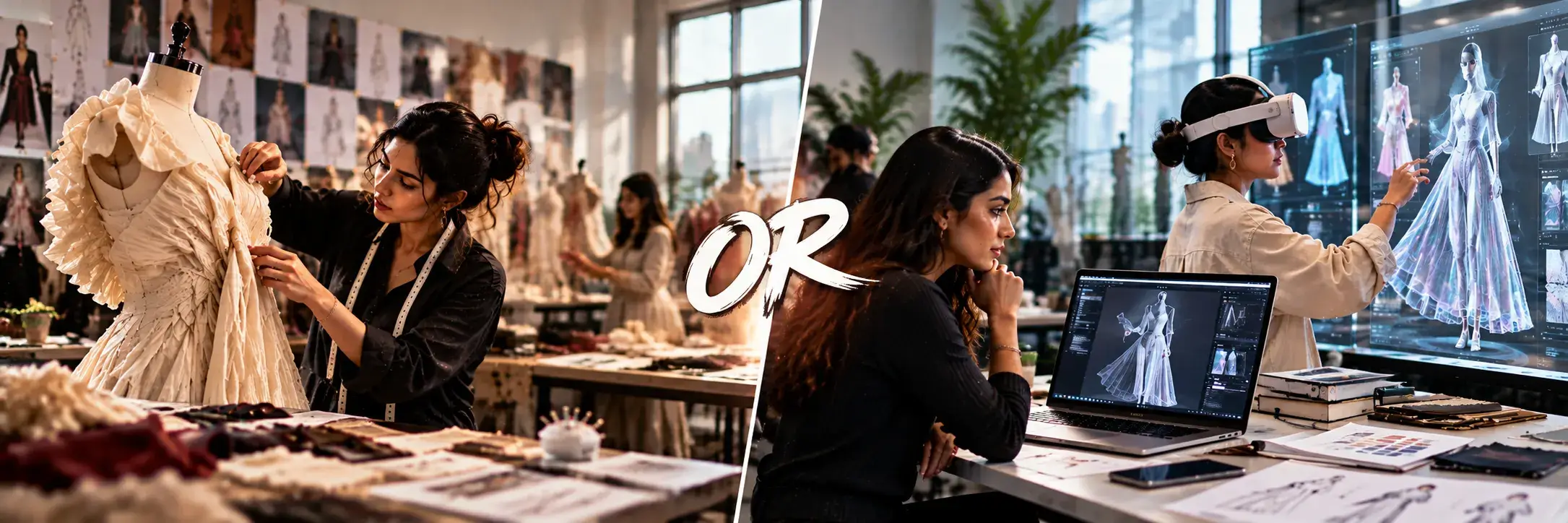
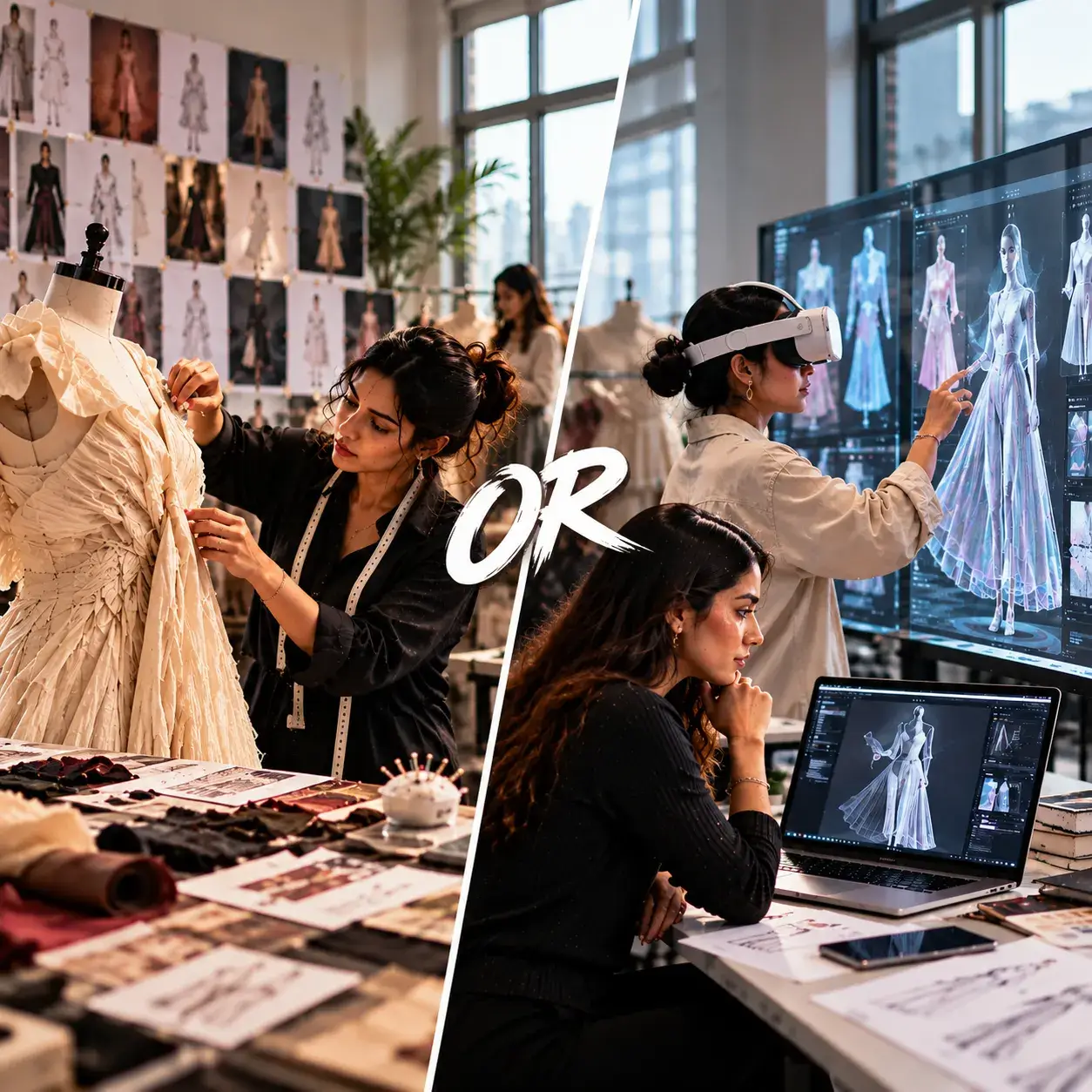
Fashion-tech careers extend beyond designing garments. Technology is influencing how clothes are developed, how materials are tested, how brands forecast demand and how consumers shop. For students pursuing a bachelor in fashion technology, these developments open up opportunities across design, manufacturing, digital innovation and business. Four broad career areas stand out.
1. Digital Fashion and Product Development
3D garment visualisation, virtual prototyping and digital pattern-making are changing how fashion products move from concept to production. Professionals in this field create digital samples, assess garment fit and collaborate with design and manufacturing teams to improve product development. Students need a foundation in garment construction, fabric behaviour and digital design tools. A fashion designing degree combined with relevant digital skills can also provide a pathway into this area.
2. Apparel Engineering and Textile Innovation
Fashion products must meet practical requirements around fit, durability, quality and manufacturing feasibility. Technical designers, apparel product developers and textile specialists help address these challenges, from preparing garment specifications to evaluating innovative materials and improving production processes. A bachelor of fashion technology course with exposure to textiles, pattern-making and apparel manufacturing can be relevant preparation. Roles involving advanced materials research may require additional technical qualifications.
3. Fashion Analytics, Digital Retail and Sustainability
Fashion businesses increasingly use data to understand customer preferences, forecast demand and manage inventory. At the same time, digital retail technologies are reshaping online shopping, while sustainability initiatives are encouraging more efficient material use and responsible production. Graduates can explore careers in fashion analytics, e-commerce, supply chain optimisation and sustainable product development. These roles benefit from a combination of fashion knowledge, analytical thinking and an understanding of business operations.
4. Fashion-Tech Product Management and Entrepreneurship
Technology also creates opportunities to develop solutions for problems across the fashion value chain. Professionals may work on digital fitting platforms, apparel management software, inventory systems or technology-led fashion businesses. Product management involves translating user needs into practical solutions, while entrepreneurship requires identifying market opportunities and building viable business models. Students can begin developing these capabilities through interdisciplinary projects, internships and prototypes that demonstrate their ability to solve real industry problems.
Ultimately, the right career path depends on whether a student is drawn to creative experimentation, technical problem-solving, data-driven decisions or business innovation. A bachelor in fashion technology can provide a starting point, but practical experience, specialised skills and an adaptable approach to learning are what help graduates translate their education into meaningful career opportunities.