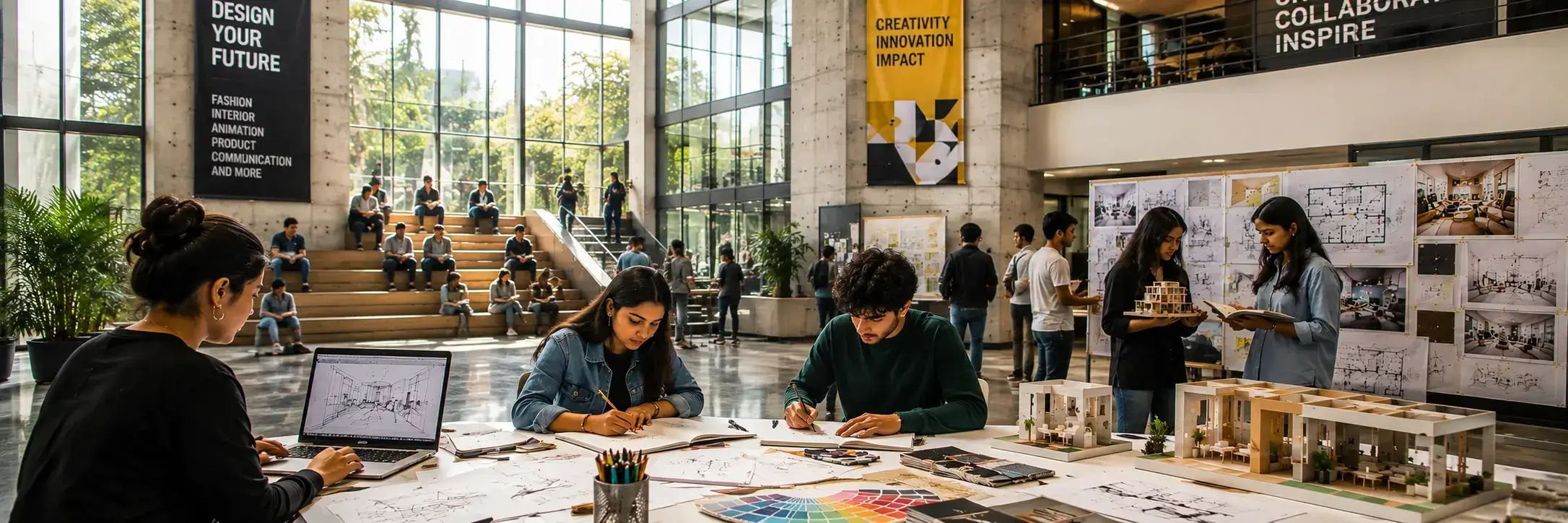
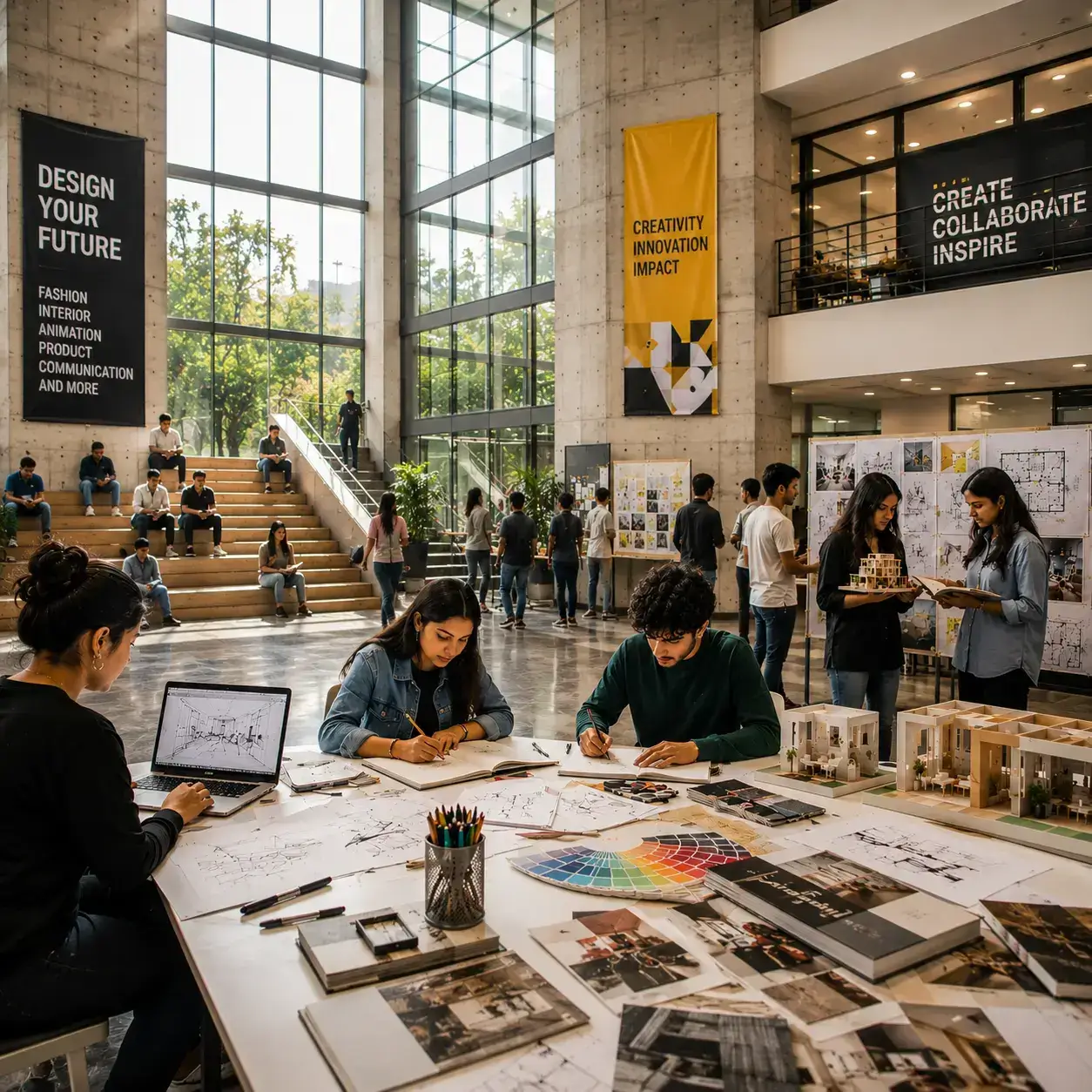
Design is no longer divided into isolated creative fields. Fashion, interiors, graphic design and animation increasingly overlap with technology, business, culture and consumer behaviour. For students exploring a design school in Mumbai, understanding what each discipline involves can help them choose a pathway that matches both their creative interests and long-term career goals.
Fashion Design: What Fashion Designing Colleges in Mumbai Should Teach
Fashion design goes well beyond creating garments. A contemporary fashion designer needs to understand materials, consumers, culture, branding, production and the business behind a fashion label.
A
bachelor of fashion design can introduce students to areas such as:
-
Fashion research and trend analysis:
Understanding cultural influences, consumer behaviour and emerging fashion movements.
-
Textiles and materials:
Exploring fabrics, surface techniques, sustainable materials and material innovation.
-
Apparel design and construction:
Translating concepts and sketches into wearable products.
-
Fashion communication:
Developing visual stories through styling, photography, campaigns and other media.
-
Branding and retail:
Understanding how fashion products are positioned, presented and sold.
-
Sustainability:
Examining responsible sourcing, circularity, waste reduction and ethical production.
-
Digital fashion:
Exploring digital tools, 3D design and emerging technologies that are reshaping the industry.
-
Entrepreneurship:
Understanding how creative ideas can evolve into fashion labels, businesses and independent practices.
The larger goal is to develop designers who can think beyond an individual garment and understand the entire ecosystem around fashion.
Interior Design: What Interior Design Colleges in Mumbai Actually Teach
Interior design is fundamentally about how people experience and use spaces. A visually attractive room is not necessarily a successful interior. It also needs to function well, respond to its users and work within practical, environmental and economic constraints.
Depending on the programme, students may explore:
-
Spatial planning:
Understanding circulation, proportions, zoning and the relationship between different spaces.
-
Materials and construction:
Learning how materials behave and how design ideas are translated into physical environments.
-
Furniture and product design:
Exploring objects and furnishings as integral parts of an interior.
-
Lighting:
Understanding how natural and artificial light influence function, atmosphere and perception.
-
Human-centred design:
Designing spaces around behaviour, accessibility, comfort and diverse user needs.
-
Sustainable interiors:
Considering material choices, energy efficiency, adaptive reuse and environmental impact.
-
3D visualisation:
Using digital tools to communicate spatial concepts and develop realistic representations.
-
Different typologies:
Working across residential, hospitality, retail, workplace and other environments.
-
Professional practice:
Understanding briefs, budgets, timelines, clients, vendors and project coordination.
Students considering a
BSc interior design pathway should particularly examine how much practical and project-based learning is built into the programme.
The future interior designer is not simply decorating a room. They are solving spatial problems and shaping how people live, work, shop, relax and interact.
Graphic Design: What Graphic Design Courses in Mumbai Should Cover
Graphic design has expanded considerably with the growth of digital media. Traditional print remains relevant, but designers now work across websites, apps, social platforms, packaging, brand identities, motion graphics and interactive experiences.
This makes graphic design courses in Mumbai relevant to students interested in branding, advertising, digital media, publishing and visual communication.
A strong graphic design education can cover:
-
Typography:
Understanding type, hierarchy, readability and the emotional character of written language.
-
Composition and layout:
Learning how visual elements work together to create clarity and emphasis.
-
Colour theory:
Understanding how colour influences perception, communication and brand recognition.
-
Brand identity:
Developing consistent visual systems rather than isolated graphics.
-
Digital design:
Creating visual experiences for websites, applications and digital platforms.
-
Motion graphics:
Bringing typography, imagery and visual identities into movement.
-
Packaging design:
Understanding how design works within physical products and retail environments.
-
Information and data visualisation:
Making complex information easier to understand through visual systems.
-
Visual storytelling:
Using images, typography and composition to communicate ideas and narratives.
The emphasis should not be on mastering a particular software package alone. Tools will continue to change. Design principles, visual judgement and the ability to communicate an idea effectively have greater long-term value.
Animation: What Animation Courses in Mumbai Cover Beyond Film
Animation has moved far beyond traditional films and television. It is now used across advertising, gaming, education, digital content, product experiences, virtual environments and interactive media.
A future-oriented animation education can introduce students to:
-
Story development:
Building narratives, characters, concepts and visual worlds.
-
Drawing and visual development:
Developing the ability to communicate ideas visually.
-
2D animation:
Understanding movement, timing, expression and traditional animation principles.
-
3D animation:
Working with modelling, texturing, lighting, rigging and movement.
-
Motion design:
Creating animated graphics for advertising, branding, digital content and communication.
-
Visual effects:
Exploring how digital elements can be integrated into live-action or virtual environments.
-
Game and interactive experiences:
Understanding animation within interactive digital worlds.
-
Emerging technologies:
Exploring how AI, real-time rendering and immersive technologies are changing production workflows.
Technology can make animation faster and more sophisticated, but storytelling remains central. A technically impressive animation still needs a clear idea, emotional purpose and an understanding of its audience.