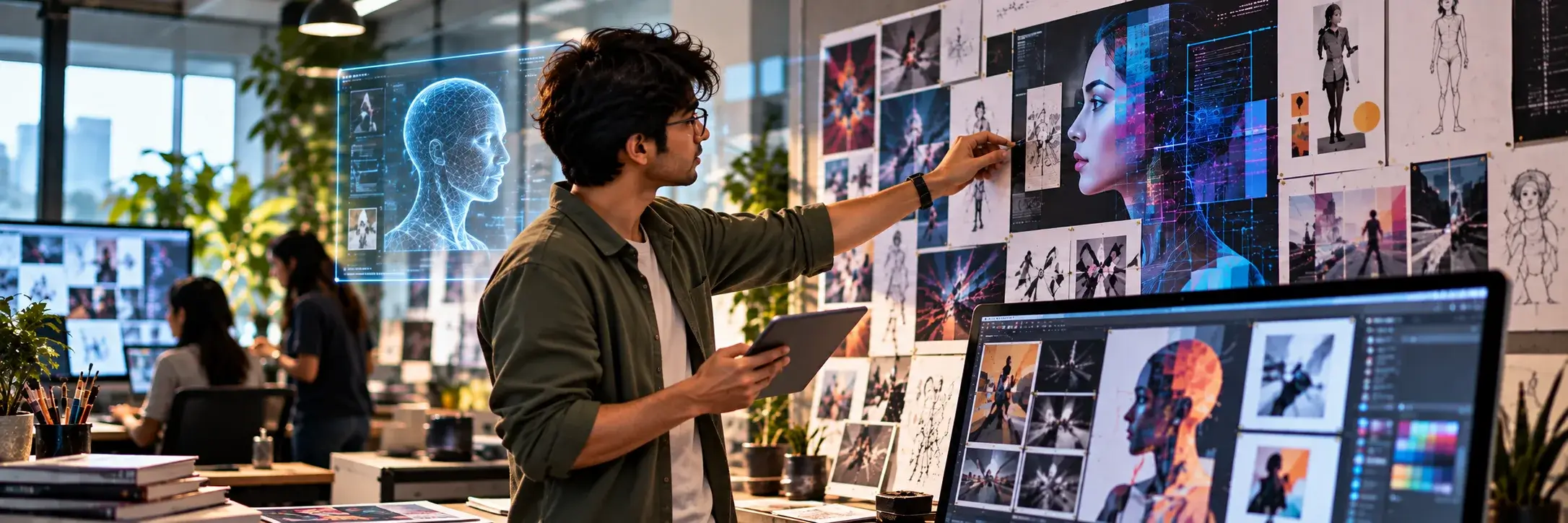
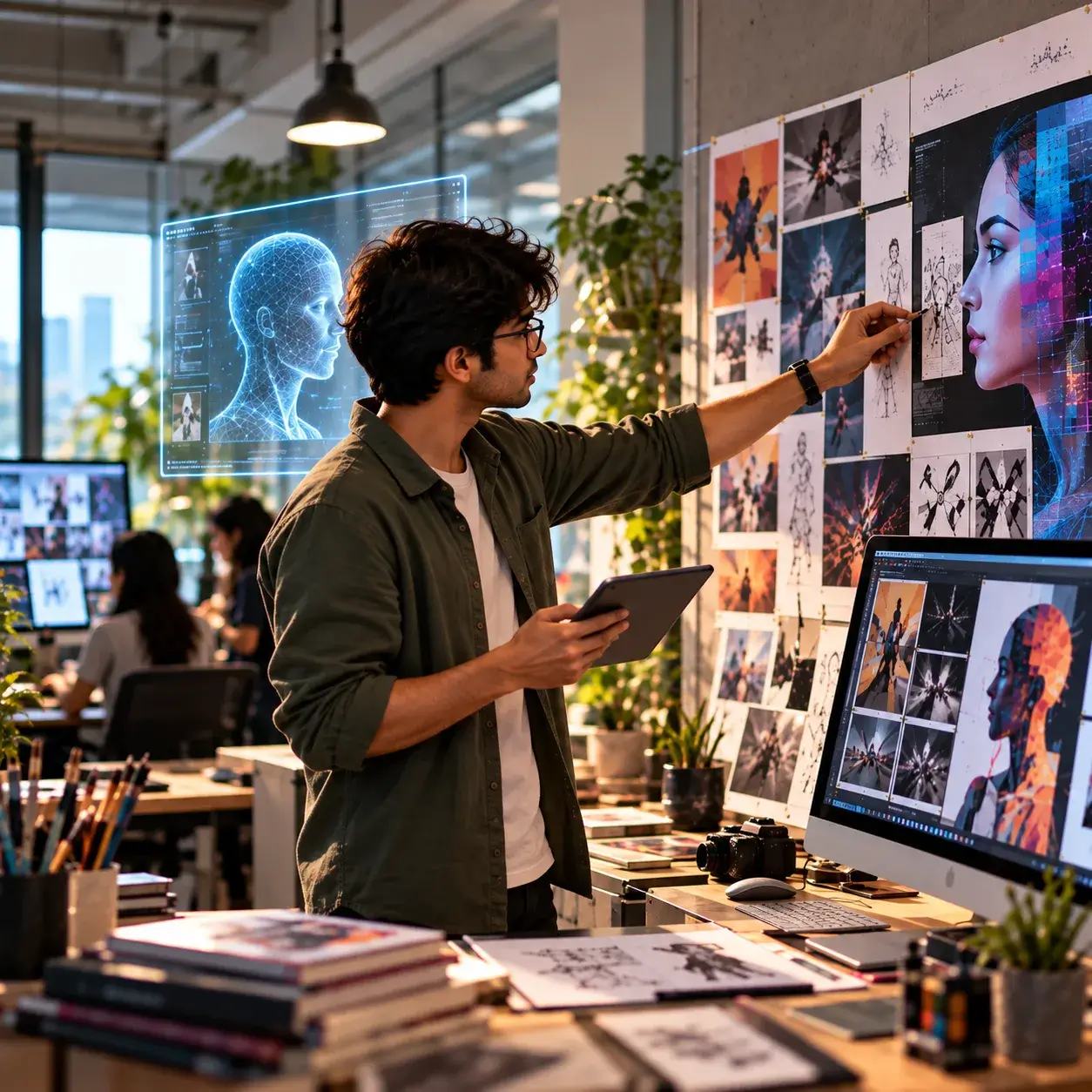
As AI becomes more integrated into creative workflows, preparing for a design career requires a balance of foundational knowledge, technological adaptability and practical experience. For aspiring communication designers, the goal is not to master every emerging tool but to understand how technology can support creative problem-solving. Developing this mindset early can help students build a portfolio and skill set that remain relevant as the industry evolves.
Build Strong Design Fundamentals
A solid understanding of typography, colour theory, composition, visual hierarchy and storytelling provides the foundation for effective communication design. These principles help designers evaluate AI-generated outputs critically and refine them into purposeful visual solutions rather than relying on automated results.
Experiment with AI Design Tools
Explore AI tools for graphic design, visual generation and UI/UX prototyping to understand their capabilities and limitations. Experimenting with different tools can help students identify where AI improves efficiency, where manual refinement is necessary and how technology can support their creative process.
Develop a Problem-Solving Portfolio
A strong portfolio should demonstrate more than polished visuals. Document the brief, research, concept development, iterations and reasoning behind each project. When AI is involved, explain how its outputs were evaluated and refined to show independent thinking and creative ownership.
Gain Practical and Interdisciplinary Experience
Working on real-world briefs, collaborative projects and challenges that combine design with technology or business helps students understand practical constraints. This experience develops the ability to communicate ideas, incorporate feedback and create solutions that address genuine audience needs.
Commit to Continuous Learning
AI capabilities and design workflows will continue to change. Following industry developments, seeking feedback from practitioners and regularly experimenting with new approaches can help designers adapt without becoming dependent on a particular platform or tool.
Ultimately, an AI-augmented design career requires more than technical familiarity. It calls for curiosity, critical thinking and the ability to combine emerging technologies with human insight to create communication that is relevant, accessible and meaningful.