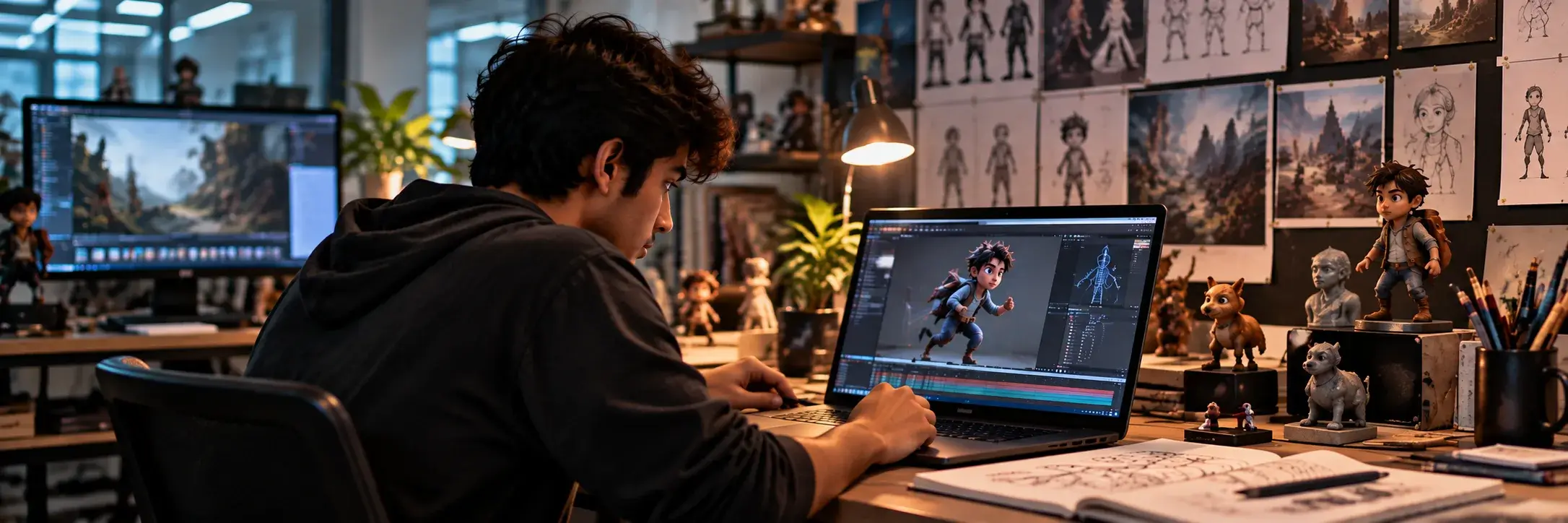
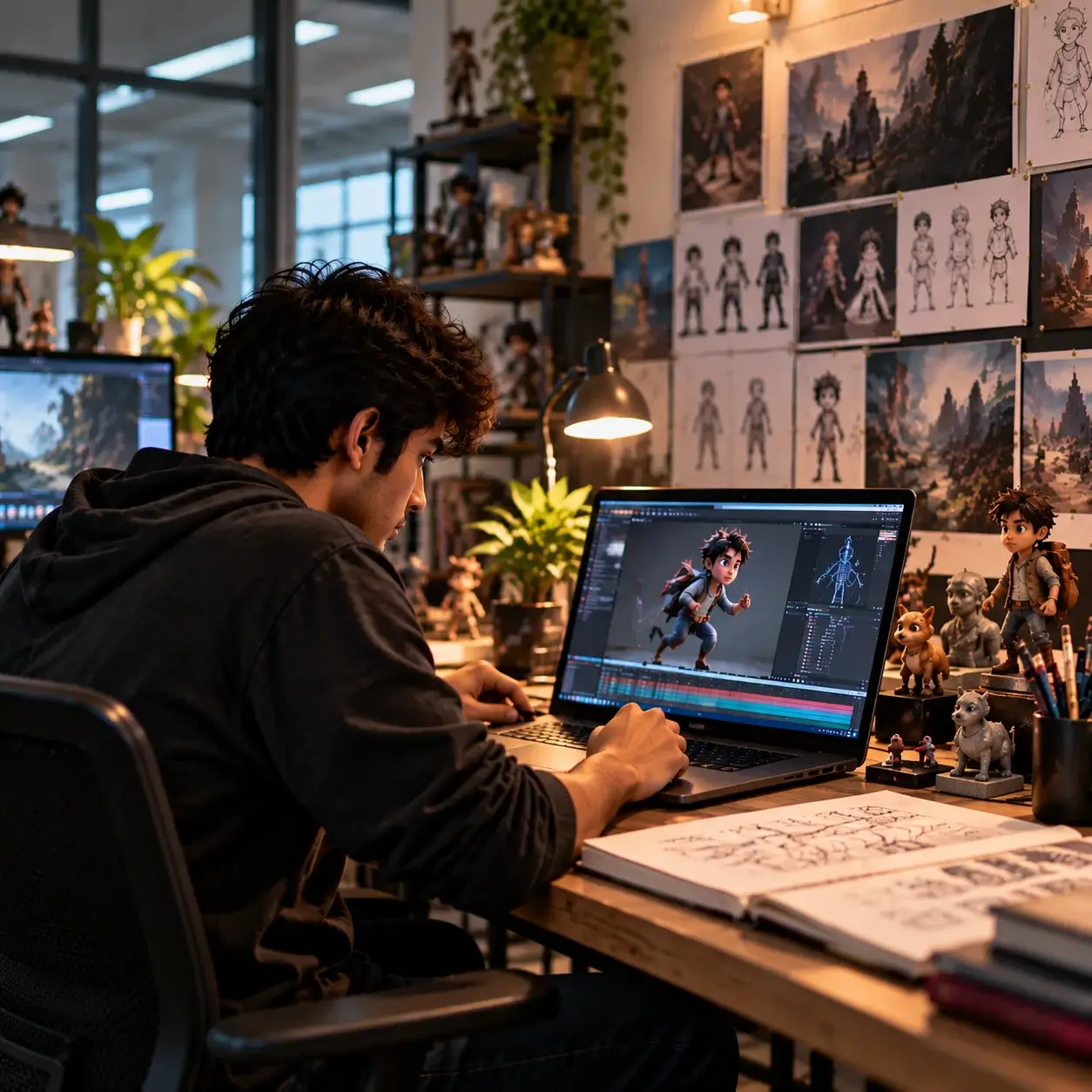
A well-designed animation portfolio website does more than host your work. It creates a first impression, guides visitors through your projects and makes your creative strengths easy to understand. For aspiring animators and VFX artists after animation and vfx course, the website should balance visual presentation with usability, ensuring that the work remains the primary focus.
You do not need advanced web development skills or an elaborate design to create an effective portfolio. What matters is how thoughtfully you organise your projects, present your abilities and make the experience accessible to studios, recruiters and potential clients.
1. Choose the Right Portfolio Website Platform
Start by selecting a platform that supports the type of work you create and the level of customisation you need. Website builders such as Wix and Squarespace can help you create a portfolio without extensive coding knowledge. Platforms such as Adobe Portfolio and ArtStation are also worth exploring for their creative portfolio features.
If you want greater control over the layout, navigation and functionality, a custom website may be suitable. However, the platform should serve your needs rather than become a project in itself.
When choosing a platform for a 3D animation portfolio website, consider video embedding, high-resolution image support, mobile responsiveness, loading speed and ease of updating projects. The best option is one that allows you to showcase your work professionally without creating unnecessary technical complications.
2. Create a Clear and Intuitive Website Structure
A visitor should be able to understand who you are, what you specialise in and where to find your best work within a few seconds. Keep the navigation simple and avoid unnecessary pages or decorative elements that distract from your projects.
A practical animation portfolio website can include the following sections:
-
Home: Introduce yourself, highlight your specialisation and feature your strongest showreel or project.
-
Portfolio: Present selected projects in a clean, organised gallery.
-
About: Share a short professional introduction, relevant skills and creative interests.
-
Process or Case Studies: Explain your approach, individual contributions and technical decisions.
-
Contact: Provide a professional email address and links to relevant professional profiles.
You can organise projects by discipline, such as 3D animation, modelling, character design, motion graphics or compositing. This makes it easier for viewers to find work relevant to their requirements. If you work across multiple disciplines, use clear categories without making the navigation overly complicated.
3. Make Your Showreel and Best Projects the Focus
Your strongest work should appear early in the browsing experience. A recruiter or studio representative may have limited time to review your portfolio, so avoid making visitors navigate through several pages before they encounter your most relevant projects. Place a concise showreel or featured project near the top of the homepage. Follow it with selected work that demonstrates your range and technical strengths.
For a 3D animation portfolio, you could showcase a character performance, a movement study and an environment animation. If your focus is visual effects, feature compelling compositing shots, simulations or before-and-after breakdowns.
Use high-quality thumbnails that accurately represent each project. Give every project a descriptive title instead of generic labels such as "Project 1" or "Untitled". A title such as "Stylised Character Animation: Walk Cycle" immediately communicates the content and makes the portfolio easier to navigate.
4. Design Dedicated Project Pages That Tell a Story
A gallery can attract attention, but dedicated project pages help viewers understand the work in greater depth. Each page should explain the project's objective, your approach and the skills demonstrated by the final result.
A useful project page structure includes:
-
Project overview: Explain what you created and the purpose of the project.
-
Role and responsibilities: Specify whether you handled modelling, rigging, animation, lighting, rendering or compositing.
-
Creative process: Include relevant sketches, storyboards, references, iterations or technical breakdowns.
-
Final output: Present the finished animation, render or VFX sequence clearly.
-
Tools and techniques: Mention the software and methods used where they add meaningful context.
-
Key learning: Briefly describe a challenge you solved or a decision that improved the outcome.
For collaborative projects, clearly identify your contribution and credit other team members. This is particularly important for students whose strongest work may come from group assignments. Transparency helps viewers evaluate your individual capabilities accurately.
5. Optimise Images and Videos for Performance
Animation and VFX projects often contain large video files, high-resolution renders and detailed textures. If these assets load slowly, visitors may leave before seeing the work. Optimise your media without compromising its visual quality. Compress images appropriately, use efficient image formats, and embed videos through reliable hosting platforms where practical. Avoid uploading unnecessarily large files when a well-optimised version communicates the same level of detail.
Test video playback on different devices and connections. Make sure the important details remain visible and that the portfolio does not depend on high-end hardware to function properly.
For an animation portfolio website, usability is just as important as visual quality. Avoid autoplay audio, excessive transitions and oversized media that make navigation difficult. Visitors should be able to watch, pause and replay your work without friction.
6. Make the Website Responsive and Accessible
Recruiters, clients and creative professionals may discover your portfolio through a laptop, tablet or smartphone. Your website should adapt to different screen sizes without cropping important details or making navigation difficult. Check that text remains readable, menus work properly, videos fit the available space and project thumbnails maintain appropriate proportions. Test the website on multiple devices before sharing it.
Accessibility also deserves attention. Use sufficient colour contrast, descriptive page headings and meaningful text alternatives for images where appropriate. Provide captions or transcripts for relevant spoken content, and ensure that navigation is usable without relying entirely on visual cues. These improvements make your work easier to access and demonstrate attention to the details that shape a professional digital experience.
7. Use SEO to Improve Your Portfolio's Discoverability
A portfolio website should be easy to share directly, but it can also benefit from basic search engine optimisation. Clear page titles, descriptive headings, concise project descriptions and readable URLs help search engines and visitors understand the content.
For example, a page featuring a character animation project could use a title such as "3D Character Animation Portfolio | Walk Cycle Study" rather than a vague label. Describe the project naturally, including the relevant discipline, technique and creative objective.
Optimise image file sizes and use descriptive alternative text where appropriate. If you publish project videos, provide a short written explanation of what they demonstrate. This gives search engines additional context while making the page more informative for visitors.
Avoid repeating keywords unnaturally or filling project descriptions with unrelated search terms. The priority should be to communicate your work clearly. SEO supports discoverability, but it cannot compensate for weak projects or an unclear presentation.
8. Keep Your Portfolio Updated and Relevant
A portfolio should evolve as your skills improve. Review your website periodically and replace weaker projects with stronger work that better represents your current abilities and career goals.
Before applying for an internship or job, check whether the projects featured on your homepage align with the role. You can maintain a broader portfolio while adjusting your showreel or featured projects to highlight the most relevant skills.
Also verify that links work, videos play correctly, contact information is current and externally hosted projects remain accessible. Remove outdated material that no longer reflects your standards.
Ultimately, an effective animation portfolio website combines strong creative work with clear storytelling, thoughtful navigation and reliable performance. It should make it easy for visitors to recognise your strengths, understand your process and see the potential behind every project.