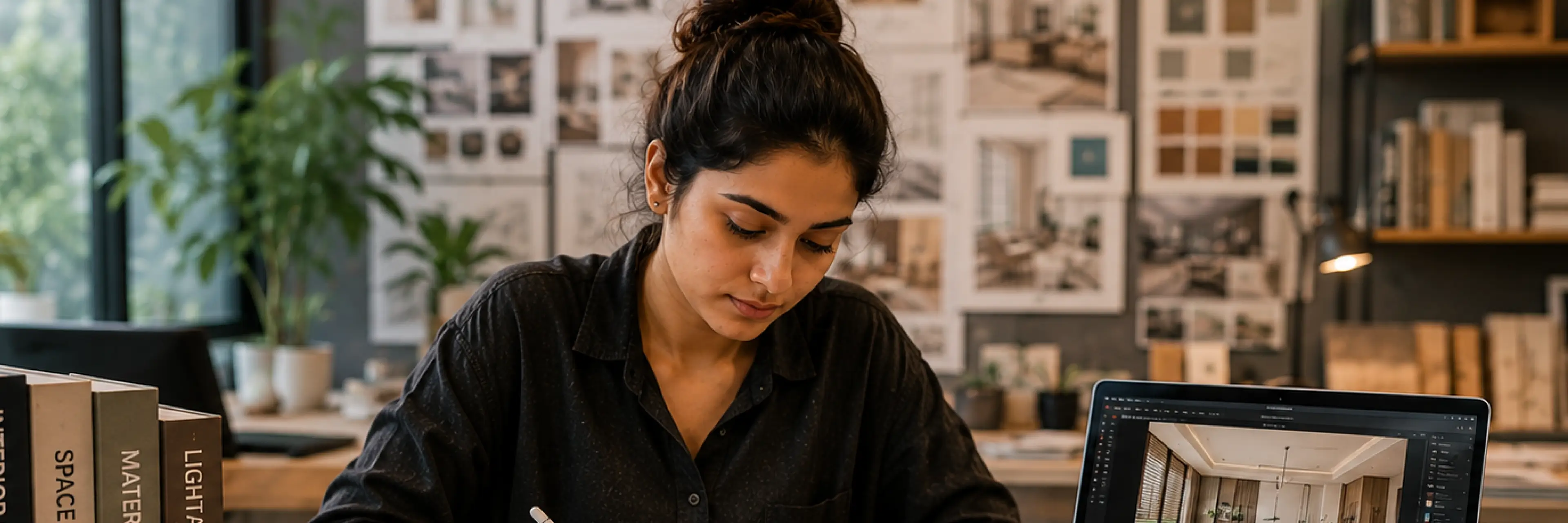
As AI becomes a bigger part of the design process, it's easy to assume that technology will become the most important skill for future designers. In reality, AI is only as effective as the designer using it. Before students can leverage emerging tools, they need a strong understanding of design principles, spatial thinking, materials, and user needs. This is where a B Des Interior Design programme plays a critical role.
A well-rounded programme goes beyond aesthetics and software training. It helps students develop the creative, technical, and strategic thinking skills needed to design spaces that are functional, meaningful, and future-ready. While curricula may differ across institutions, most B Des Interior Design subjects are built around four key areas.
Design Thinking and Creative Foundations
Every design journey begins with understanding the fundamentals. Students learn principles such as colour theory, composition, form, scale, and visual communication while developing creative problem-solving skills. This foundation helps them move beyond trends and create thoughtful design solutions that respond to real-world challenges.
Space Planning and Human-Centred Design
Interior design is ultimately about people. Students learn how to design spaces that support comfort, functionality, accessibility, and user experience. From circulation and ergonomics to behavioural patterns and spatial relationships, this area focuses on creating environments that work for the people who use them.
Materials, Construction, and Technology
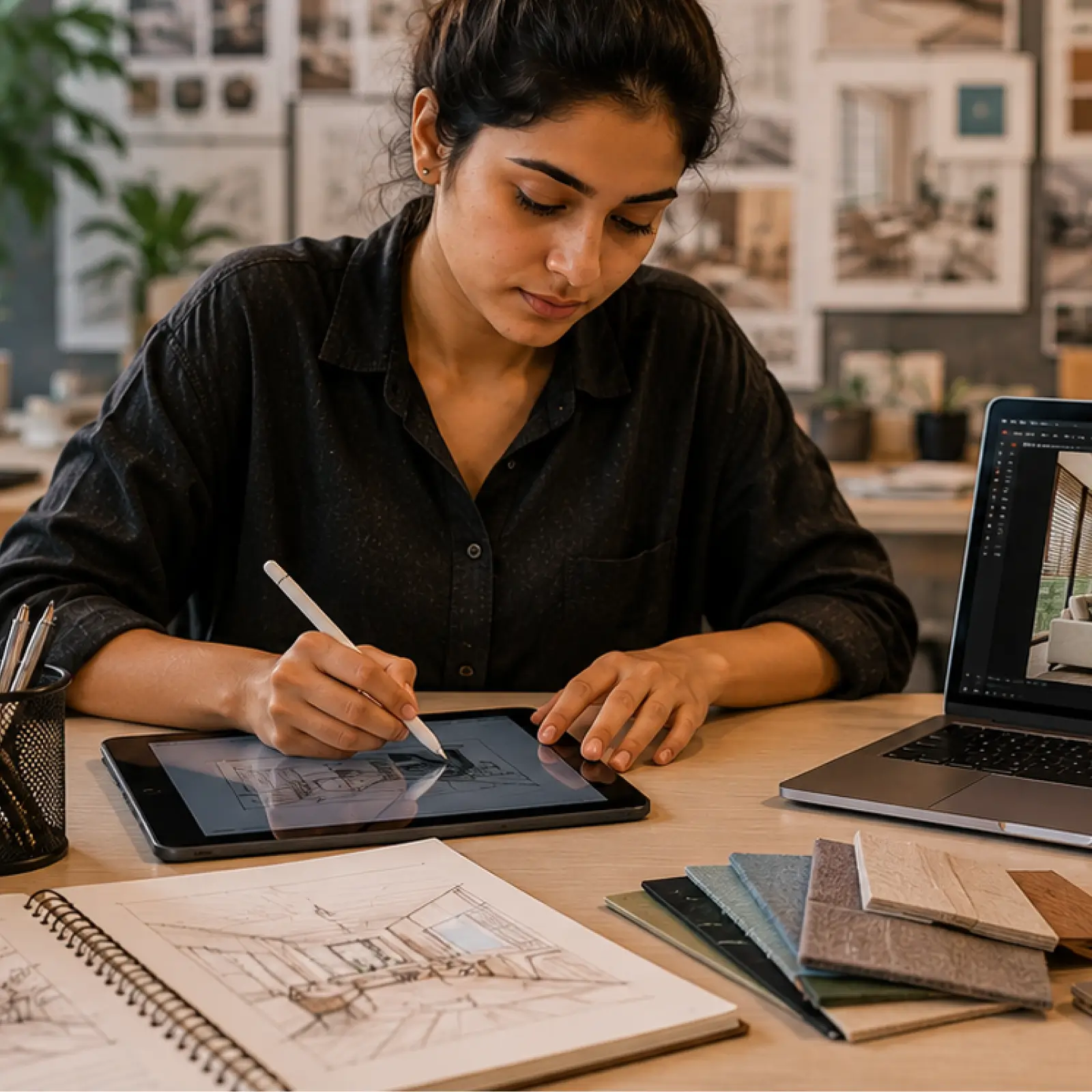
A strong design concept must also be practical and buildable. Students gain knowledge of materials, furniture systems, lighting, construction methods, and sustainable design practices. They are also introduced to digital design tools, 3D visualization, and increasingly, emerging technologies that are reshaping the profession, including AI-powered design platforms.
Industry Exposure and Professional Practice
Design education extends beyond the classroom. Through live projects, internships, workshops, and industry interactions, students learn how the profession operates in the real world. They gain exposure to client management, project execution, collaboration, and professional ethics, preparing them for the evolving demands of the design industry.
Ultimately, a
Bachelor of Interior Design is not just about learning how to design spaces. It is about developing the ability to think critically, adapt to new technologies, and create experiences that balance creativity, functionality, and human needs. These skills remain valuable regardless of how the tools and technologies of the future evolve.