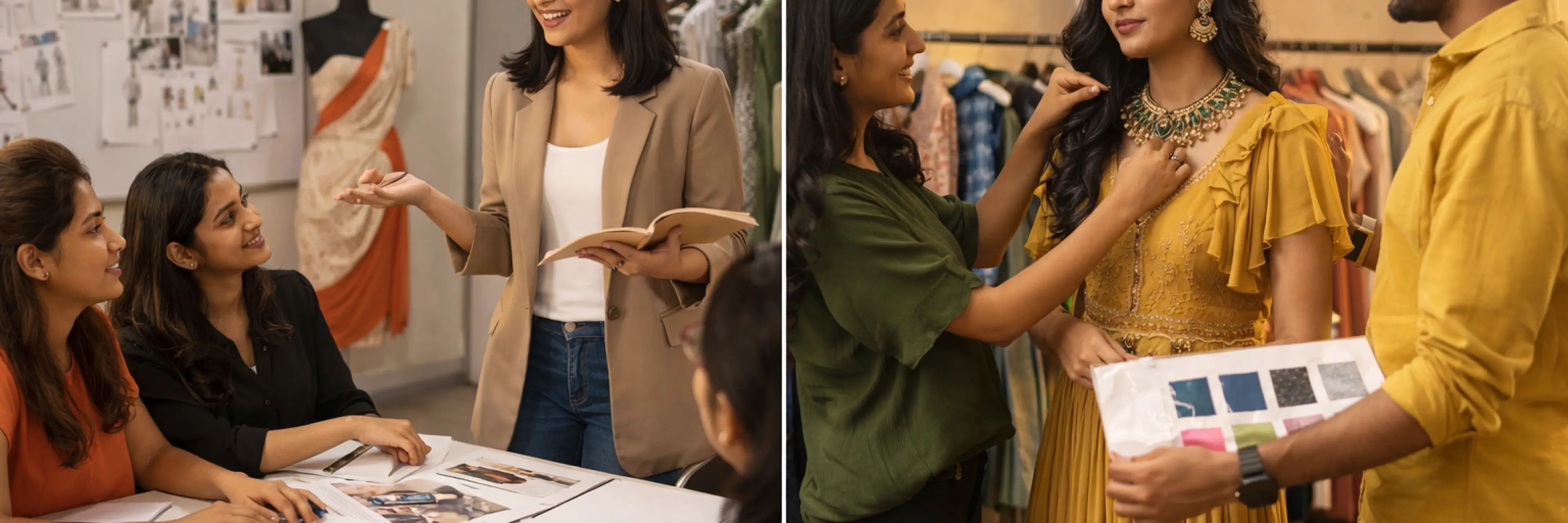
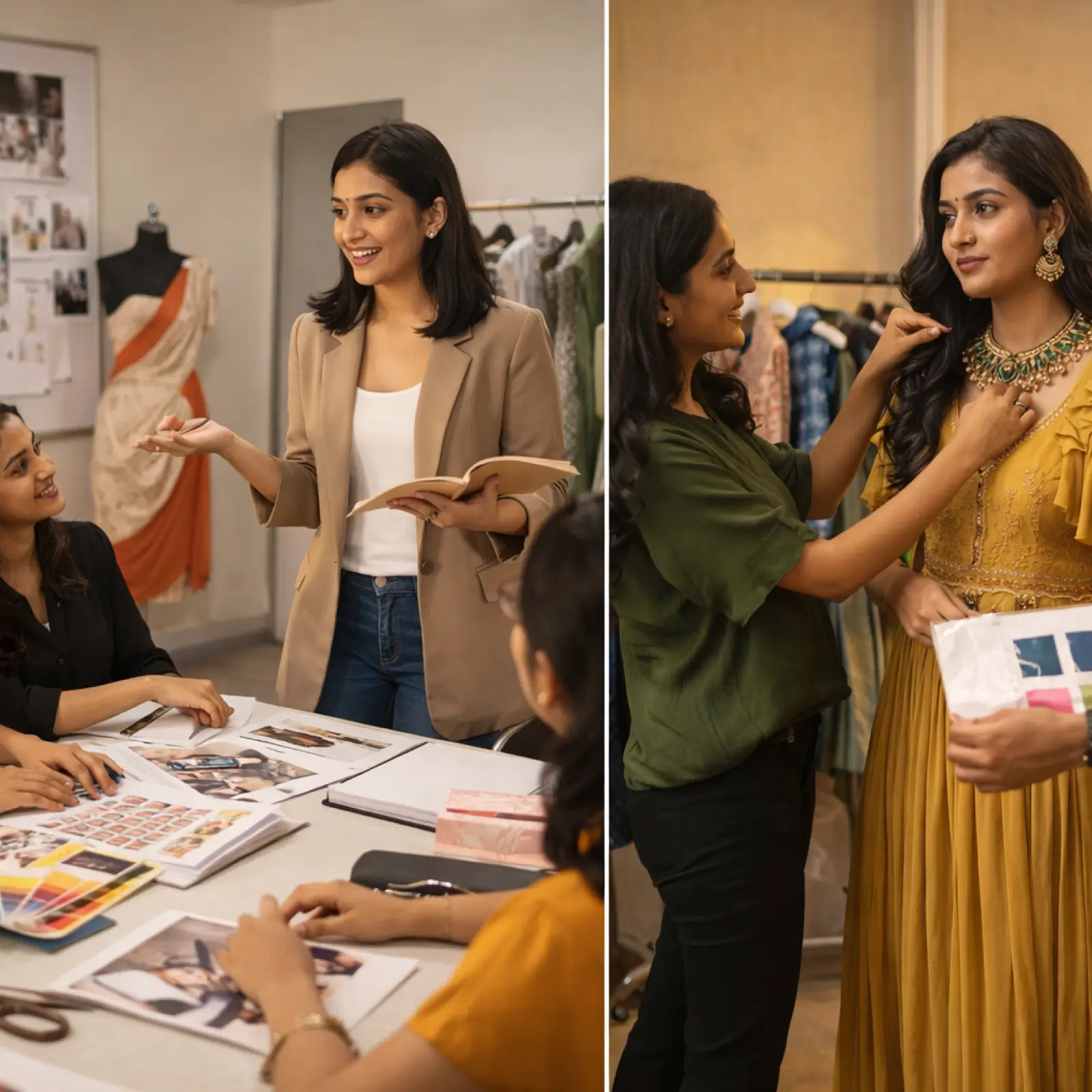
A well-designed associate degree in fashion styling or a comprehensive bachelor degree in fashion styling goes far beyond surface-level creativity. The curriculum is structured to build both artistic confidence and industry awareness, ensuring that students don't just create visually appealing work, but understand the thinking behind it. Whether one pursues a BA fashion styling, a bachelor of fashion styling, or progresses into a fashion styling masters degree, the learning journey is layered, combining theory, practice, and real-world exposure.
Visual Storytelling and Image Construction
This is where most students begin, but it quickly moves beyond the basics. Visual storytelling teaches students how to translate ideas into images that communicate clearly and powerfully. It's not just about putting together outfits that look good, but about creating a cohesive narrative through silhouettes, textures, colours, and composition. Students learn how to build mood boards, develop concepts, and execute shoots that reflect a clear point of view. Over time, they begin to understand how small styling choices can shift the entire meaning of an image, making this one of the most critical skills within a fashion styling degree.
Fashion History Culture and Context
Styling becomes far more meaningful when it is informed by context. In a BA fashion styling and production or BA hons fashion styling and production programme, students explore how fashion has evolved across time and cultures, and how it continues to respond to social, political, and economic shifts. This helps them recognise references, avoid repetition, and create work that feels relevant rather than derivative. Understanding context also allows stylists to draw from diverse influences with intention, rather than using them superficially. It builds a depth of thinking that separates a trained stylist from someone relying purely on instinct.
Industry Practices and Professional Workflows
A strong styling degree ensures that students are prepared for the realities of the industry, not just its creative side. This includes learning how to collaborate with photographers, designers, makeup artists, and creative directors, as well as understanding timelines, budgets, and production logistics. Students are introduced to the practical aspects of sourcing garments, managing wardrobes, and executing shoots under real constraints. A bachelor degree in fashion styling often mirrors professional environments, helping students transition smoothly into the workplace with both confidence and clarity.
Digital Styling and New Media
The role of a stylist has expanded significantly with the rise of digital platforms. Today, styling is not limited to magazines or runway shows. It exists across social media, e-commerce, and content-driven platforms. A fashion styling masters degree or even an advanced undergraduate programme introduces students to styling for digital formats, where attention spans are short and visual impact needs to be immediate. They learn how to adapt aesthetics for different platforms, understand content trends, and create visuals that are both engaging and strategically aligned with brand goals.
Personal Branding and Entrepreneurial Thinking
Many stylists today work independently or build their own presence, which makes personal branding an essential part of the curriculum. A personal stylist degree or a bachelor of fashion styling often includes training in portfolio development, client management, and self-presentation. Students learn how to position themselves in a competitive industry, build networks, and approach their work as both a creative and professional practice. This entrepreneurial mindset allows them to explore diverse career paths, from freelance styling to consulting and content creation.
Together, these areas create a well-rounded learning experience where creativity is constantly supported by context, strategy, and application. Rather than producing stylists who simply follow trends, a thoughtfully designed fashion styling degree develops individuals who can question, interpret, and shape the visual direction of the industry.