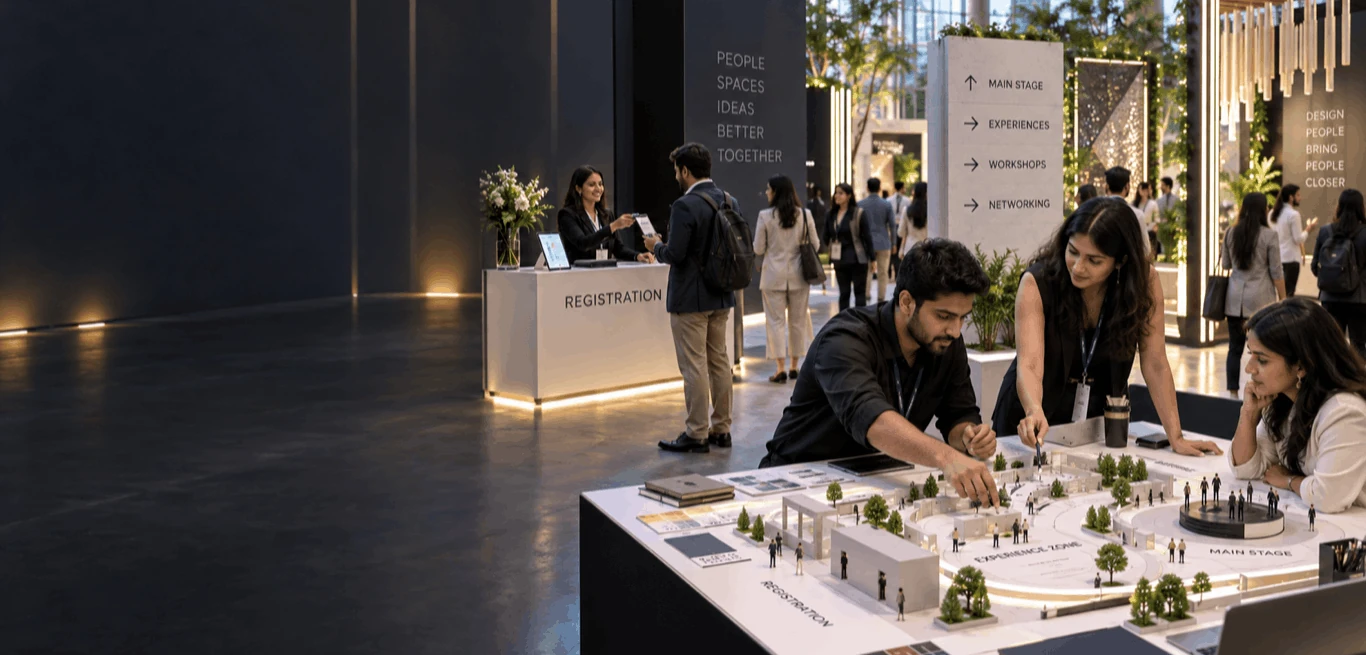
Event & Experience Design
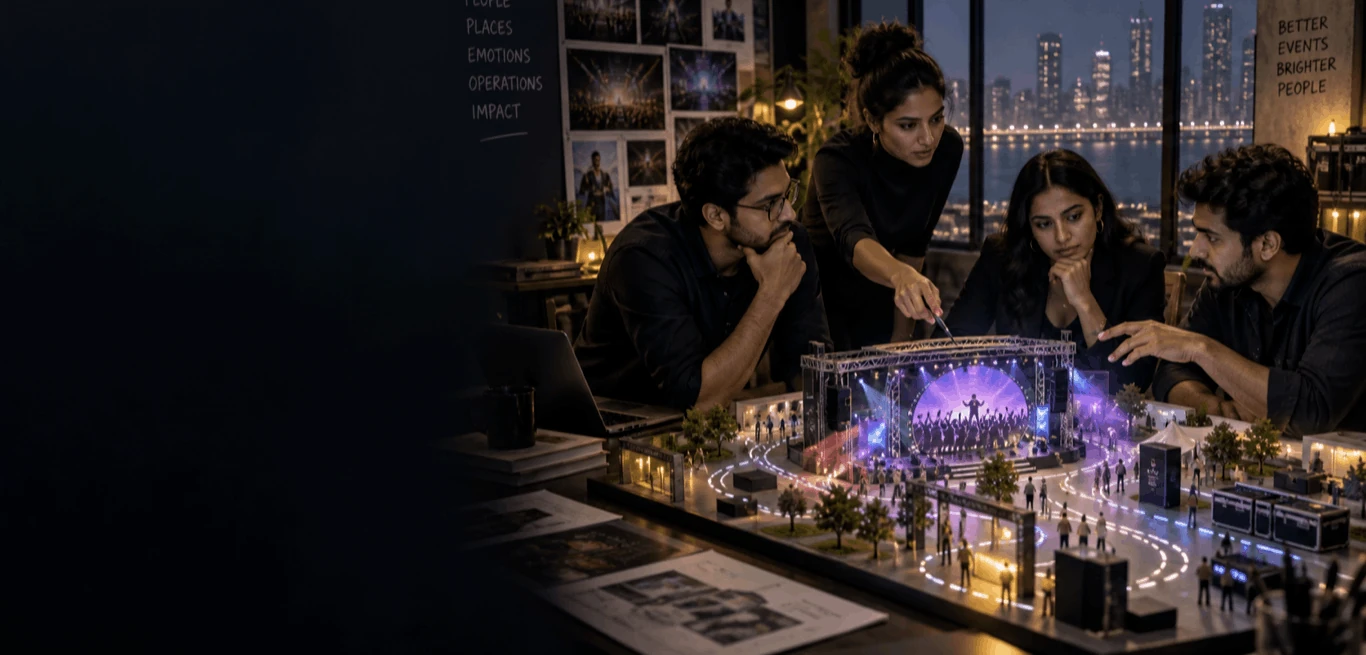
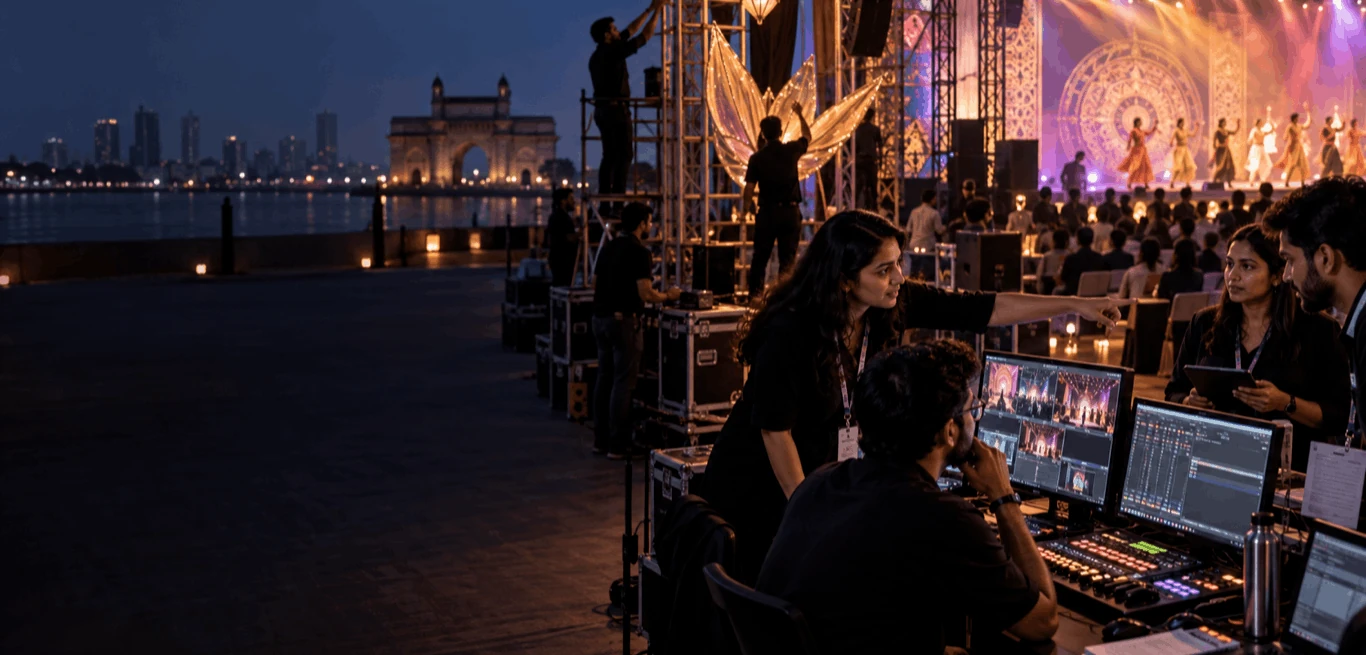
Design, develop, and commercialise events by combining experience design, live entertainment, brand strategy, technology, and business to create global experience creators.
Apply for Jul ‘27 Cohort
Application Deadline: October 25
Event & Experience Design
Design, develop, and commercialise events by combining experience design, live entertainment, brand strategy, technology, and business to create global experience creators.
Apply for Jul ‘27 Cohort
Application Deadline: October 25
Event & Experience Design
Design, develop, and commercialise events by combining experience design, live entertainment, brand strategy, technology, and business to create global experience creators.
Apply for Jul ‘27 Cohort
Application Deadline: October 25
Duration
4-Year Degree - B.Tech.
Eligibility Criteria
60% in Class XII
((Any Stream) or equivalent IB / A-Levels with Maths
Next Intake
July 2027
Session begins from 17th July 2027
The MBA in Event & Design is a two-year, four-semester program that goes beyond traditional to view events as designed human experiences with ownable cultural assets. It addresses India's transition to an experience economy, in which live entertainment, brands, sports, luxury, retail, and hospitality increasingly compete on experience quality rather than format. Using Mumbai's dense ecosystem of brands, agencies, venues, and cultural institutions as a live laboratory, the program integrates creative direction, cultural intelligence, spatial and sensory design, technology, production, and entrepreneurship, preparing graduates to conceptualize, produce, and scale meaningful live experiences from insight to execution.

Our Globally Benchmarked Curriculum

Semester 1
Develops fundamental skills in calculus, physics, computational Python programming, and quick physical-digital prototyping to transform unstructured problems into functioning concepts.
Design, Systems & Visualisation Studio 1
Introduces design thinking, observation, problem framing, visualization, and systems representation through hands-on, iterative projects.
Engineering Mathematics I Calculus & Linear Algebra
Covers differential and integral calculus, vectors, matrices, and linear algebra as a practical mathematical toolkit applied to real engineering problems.
Physics of Engineered Systems
Explores fundamental physical principles—including mechanics, electricity, and magnetism—underlying sensors, actuators, and electromechanical hardware.
Computational Thinking & Programming 1
Teaches algorithmic problem-solving and programming fundamentals using Python through writing, testing, and debugging code from scratch.
Making & Prototyping Lab 1
Provides hands-on experience with physical tools, digital 3D modeling, rapid prototyping, and electronics to build testable physical artifacts.
Communication for Technology & Design
Develops technical writing, presentation skills, documentation standards, and professional feedback habits tailored for engineering and design contexts.
Skill-Up Elective
Skill-Up Elective offers specialized learning opportunities beyond the core curriculum, enabling students to explore emerging tools, creative practices, and interdisciplinary skills that enhance professional growth.
Semester 2
Moves from concept to proof via user research, statistical reasoning, fundamental electronic circuits/sensors, materials science, and introductory AI.
Design, Systems & Human-Centred Studio II
Focuses on moving from problem framing to evidence-led intervention using user research, system mapping, iterative prototyping, and integrating physical, digital, or intelligent elements into a prototype.
Engineering Mathematics II — Probability, Statistics & Modelling
Introduces probability, statistics, uncertainty, basic differential-equation reasoning, and mathematical modelling applied to engineering datasets and quantitative decision-making.
Computational Thinking & Programming II
Covers object-oriented programming, core data structures, modular software design, and the responsible, critical use and ownership of AI-assisted development tools.
Electronics, Sensors & Intelligent Systems
Introduces basic electronic circuits, analog/digital concepts, sensor and actuator interfacing, and microcontroller-level interaction to make physical systems sense and respond.
Data, AI & Emerging Technology Foundations
Provides a programme-neutral introduction to data representation, basic machine learning, generative AI, evaluation of AI reliability, and associated ethical and safety considerations.
Materials Science & Engineering
Explores the relationship between material structure, properties, processing, and performance across metals, polymers, composites, ceramics, and semiconductors with a focus on sustainable selection.
Technology, Society & Sustainability
Integrates professional ethics, safety obligations, intellectual property, environmental responsibility, and societal impacts into technology choices and engineering decisions.
Why our Year 1 outpaces every
other design school?
ISDI School of Design
Multidisciplinary Exposure
Offers a Major–Minor Pathway where students combine core specialization with a secondary focus called a minor.
Integrated Design Thinking
Combines design thinking, observation, and research fostering strategic and creative problem-solving.
Holistic, Future-Ready Learning
Includes forward-looking courses like Sustainable System and Time, focusing on environmental impact.
Other Design Schools
Holistic, Future-Ready Learning
Other design schools follow single-track, restricting students to one specialisation throughout the program.
Theory–Practice Gap
Often separates theory and practice, introducing research much later as an
after-thought.
Aesthetic-Centric Focus
Primarily emphasizes form and aesthetics, with limited focus on sustainability or systems thinking.

Admissions — The Design Way

Admissions in 4 Creative Steps
Know more
01
Submit the Application Form
Apply for July 2027 Intake
02
Creative Aptitude Test
03
Portfolio Review + Interview
04
Final Selection & Offer Letter
Eligibility
Indian Boards (ISC / CBSE / State Boards)
  • Minimum 60% overall in Class XII
  • Mathematics is a mandatory subject
A-Levels (UK)
  • Minimum grades A, B, or C in any 2 subjects
  • Plus a Grade B or above in Mathematics
  • Total of 3 subjects required
International Baccalaureate (IB)
A minimum of 24 points, including:
  • 3 Higher Level (HL) subjects
  • 3 Standard Level (SL) subjects
  • Mathematics is mandatory
Application Fee: ₹1500
After selection, the enrolment fee of ₹50,000 to secure your seat is Nonrefundable!
Fee Structure
We believe in clarity. Here’s a simple year-on-year breakdown of our fees!
Loans & Scholarships
That’s right – Funding just got easier! We partner with India’s top banks to support your journey to success. And, Our ATLAS Scholarship is there to enable access to world-class education for you and build a lifelong growth.
Why Design Engineering at ISDI x Parsons
Design at the Edge
of Human Behaviour
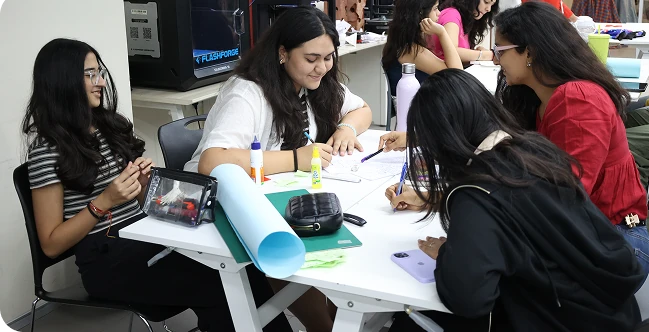
Our classrooms are live labs. You’ll ideate, iterate, fail, restart, and refine in spaces designed for doing, not just thinking.
The Only Program
of Its Kind
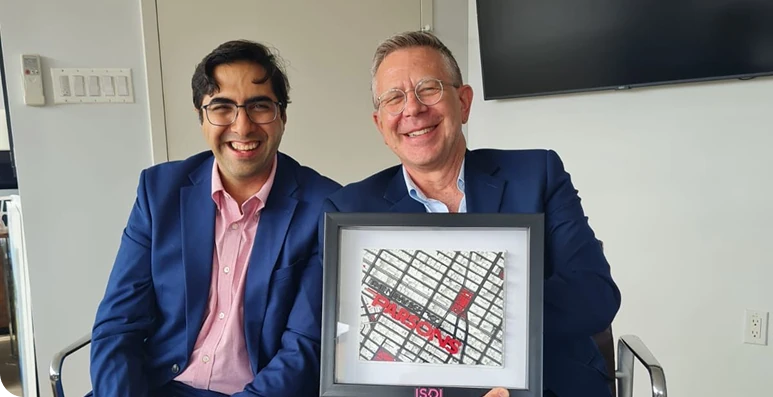
Curriculum shaped by Parsons,
New York reimagined for today’s
Indian context.
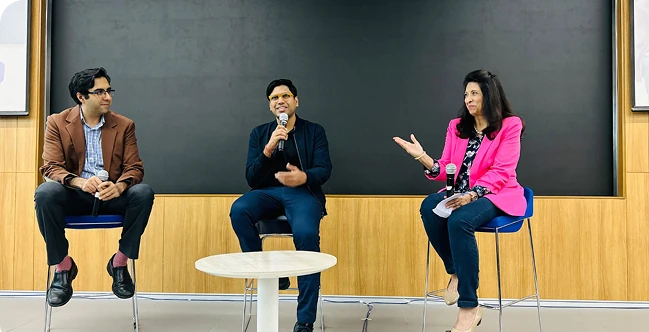
Your Mentors Are
Also Makers
Learn from practicing designers, strategists, and studio founders,
the people who design the world
you interact with.
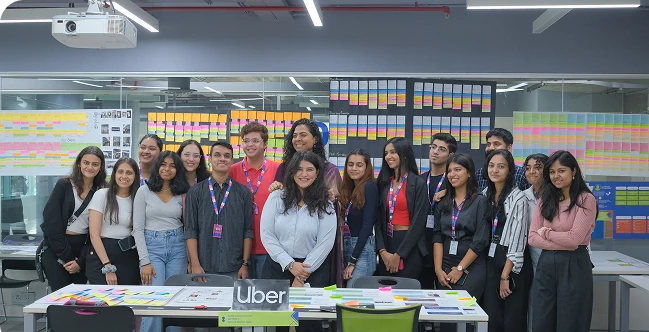
Everything is a
Studio Experience
Our classrooms are live labs. You’ll ideate, iterate, fail, restart, and refine in spaces designed for doing, not just thinking.
The Future is Cross-
Disciplinary
Work alongside fashion designers, product innovators, entrepreneurs, coders, and media artists, because good ideas don’t exist in silos.

Where concepts meet execution,
in and beyond the classroom.
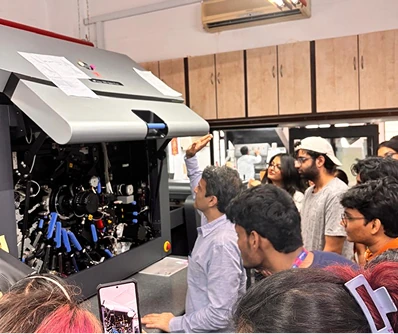
At ISDI, every project becomes part of a career-ready portfolio. From hands-on labs and design sprints to brand collaborations, internships, hackathons, and industry showcases, you graduate with real-world experience and work that speaks for itself.
  • Repro House - For CD 3rd Year
    Organized for 3rd-year CD students, the Reproscan Printing Press visit offered hands-on exposure to publication design, printing, and finishing processes bridging theory and practice while deepening understanding of the printing industry.
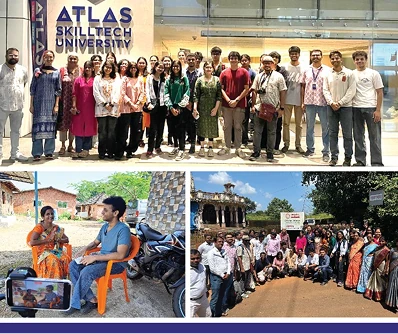
  • Visit to Swades Village
    As part of the Design Research and Ethnographic Study course, Communication Design students from ATLAS SkillTech University collaborated with the Swades Foundation for a two-day immersion in Raigad villages, gaining firsthand insights into rural life, culture, and development initiatives.
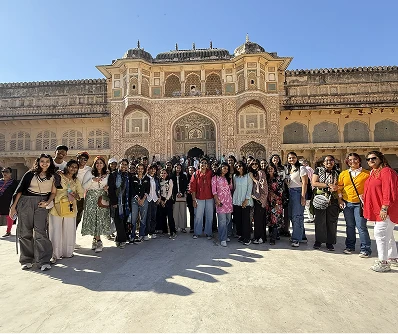
  • Jaipur Immersion
    The objective was to take them through the cultural, art and monumental heriatge of Jaipur. We also attended Workshops -Block printing , hand painting, Meenakari, Puppet making (storytelling) Meenakari jewellery. Blue pottery, Lac bangle making, Phad paintings
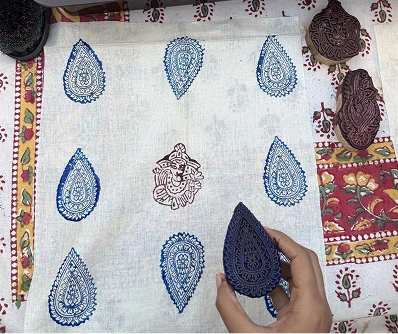
  • Workshop on block making
    During their Jaipur trip, CD students explored the art of block printing, witnessing artisans carve intricate wooden blocks and trying the craft themselves, mixing colors, aligning patterns, and experiencing the joy of bringing designs to life.
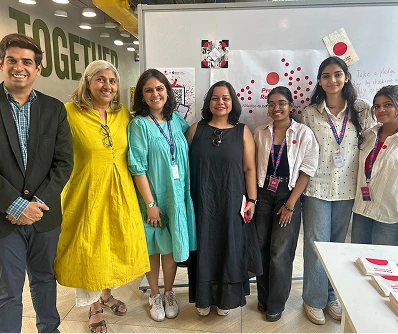
  • Portfolio Review with Tanu Sinha (Design head Pepsico India)
    3rd and 4th year CD students showed their portfolio work to PepsiCo and South Asia, head designer Tanu Sinha. She loved the work and gave them good feedback to improve on them. She was all praise for their maturity, skills and confidence in presenting.
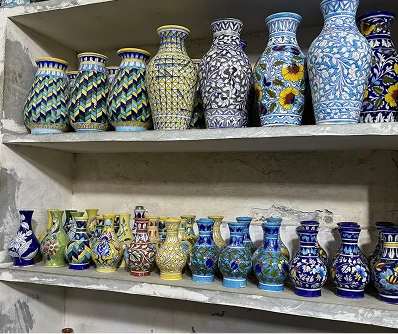
  • Blue pottery workshop at Jaipur
    During their Jaipur visit, CD students met skilled Blue Pottery artisans, learning about the craft’s Persian origins, Jaipur’s role as its hub, and the intricate process from molding to glazing while also understanding the challenges artisans face in preserving this traditional art.
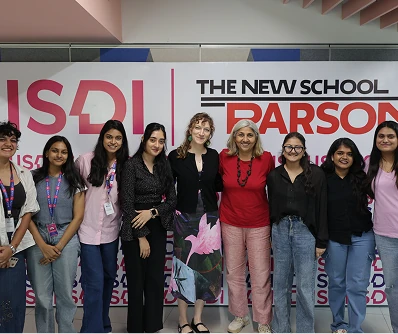
  • Portfolio presentation to international faculty Amanda from Parsons.
    3rd year showcased their brand and semiotics work to Prof Amanda, Parsons The New School and received feedback. She loved their work and gave some very positive feedback.
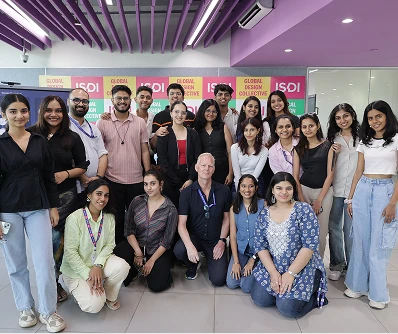
  • CD Students at WDCD
    What Design Can Do (WDCD) is an international organisation that seeks to accelerate the transition to a sustainable, fair and just society using the power of design. Based in Amsterdam, with hubs in São Paulo, Mexico City, Delhi, Nairobi and Tokyo, WDCD started in 2011 and is initiated, curated and organised by creatives.
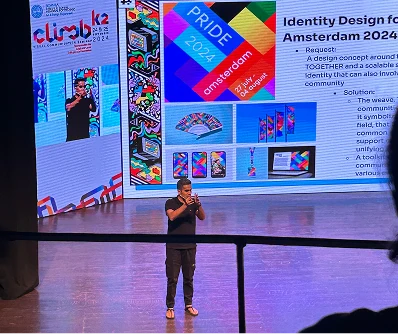
  • Climb K2 - 2 days
    Organized by the Art & Design Department of Sophia Polytechnic, Climb K2 is a visual communication seminar that unites art students across Mumbai, featuring industry leaders who inspire through their creative journeys and showcase design’s transformative power.

Student Projects in Motion

Where creativity meets momentum
Vani Jain
Amey Bardapurkar
Atharva Jadhav
Arshia Anil
Surbhi Nagari
Manya Kamath
Jay Pimpalkhare
Ameya Kulkarni
Trisha Bachkaniwala
Jinal Dharamshi
Rehaan Goregaokar
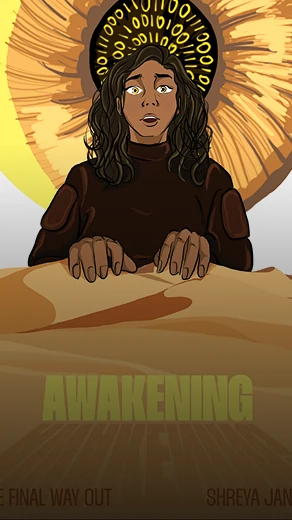
Shreya Jangid
Sailee Sanaye
Amartya Garikapati
Tisya Jain
Tanishka Shah

Student Voices: Real Voices from the Program

Hear from our students
  • I am loving the studio day and am enjoying watching what people are doing across teams
    Janhavi Chaudhary
    Class of 2023
  • We have learned so much about the industry. I am so happy to be practicing it now.
    Arundhathy Varma
    Class of 2025
  • I love our college, I am so proud of my college and excited for what’s next. I feel prepared thanks to everything my college has done for me.
    Anushka Agrawal
    Class of 2025
  • I’ve learned a lot at ISDI. I have had a great support system and thanks to that I have joined a company as a Lead Designer
    Ishaan Moirangthem
    Class of 2025

Ready to Build a Design Degree
that’s Built for the Real World?
Book a Campus Visit
More questions?
Let our AI Assistant answer your queries

Questions? We can read your mind

Yes, ATLAS ISDI School of Design & Innovation offers Communication Design as a specialisation under its 4-year B.Des program. The institute provides:

  • Career guidance and industry exposure

  • Support in portfolio development

  • Assistance in exploring internship and placement opportunities

The communication design curriculum taught at ATLAS ISDI School of Design & Innovation differs from other courses teaching communication design because our curriculum has been designed in collaboration with Parsons School of Design. It helps students with:

  • Visual communication and storytelling

  • Design fundamentals and digital media practices

  • Studio-based and project-led learning

  • Real-world problem-solving through design projects

To apply for Communication Design at ATLAS ISDI School of Design & Innovation, candidates must have:

  • A minimum of 50% in 10+2 (or equivalent) from a recognised board

  • A Design Portfolio or take the Design Aptitude Test

  • Personal Interview

Yes, students at ATLAS ISDI School of Design & Innovation may have opportunities to engage with industry professionals through:

  • Guest lectures and workshops

  • Project-based learning

  • Exposure to real-world design briefs

These interactions help students understand industry expectations and practices.

There are many career prospects one can consider after graduating from Communication Design. The diverse field opens doors to many opportunities, such as:

  • Graphic Designer

  • Content Designer

  • UI Designer

  • Social Media Strategist

  • Visual Designer

  • Digital Interaction Designer

  • Packaging Designer

  • System Engineer

  • Branding specialist

  • Brand & Way Find Designer

Yes, ISDI provides global exposure for its Communication Design Students. We have a curriculum which has been designed in collaboration with Parsons School of Design. The curriculum covers:

  • Global topics, which help students gain knowledge from a wide spectrum

  • It helps students work on challenges which are prevalent in the field

  • It allows students to understand in depth and apply the knowledge with live projects

  • The curriculum integrates disruptive design sense with experiential learning

Yes, the Communication Design program at ATLAS ISDI School of Design & Innovation benefits from collaboration with Parsons School of Design. This ensures:

  • Exposure to global design methodologies

  • Contemporary and relevant curriculum frameworks

  • A balance between conceptual and practical learning

Still have Questions?
We’re here to help!
isdi@atlasuniversity.edu.in
Find us
ISDI School of Design and Innovation
ISDI - ATLAS SkillTech University
Building 2, BKC 51
Next to Equinox Business Park
Bandra Kurla Complex Junction
Mumbai – 400051
© 2026. ISDI School of Design. All Rights Reserved.
Isdi Parsons logo