

Our Globally Benchmarked Curriculum
other design school?
after-thought.
Admissions — The Technical Way



- Minimum 50% in class 12. Mathematics and Physics are mandatory along with
any one of Chemistry/ Computer Science/Electronics/Information Technology/
Biology/ Informatics Practices/ Biotechnology/ Technical Vocational subject/
Agriculture/ Engineering Graphics/ Business Studies/ Entrepreneurship
- GCSE/IGCSE Examinations of the approved British Examination
Bodies, with minimum 5 (Five) subjects in A, B, C, D and E
grades, including English at Ordinary 'O' Level and 3 subjects
at Advanced ("A") Level has been equated with +2 qualification
with Mathematics and Physics as a mandatory subject. Along with
any one subject of Chemistry/ Computer Science /Electronics /Information
Technology / Biology /Informatics Practices / Biotechnology /
Technical Vocational subject / Agriculture/ Engineering Graphics/
Business Studies/ Entrepreneurship
(Physics and Math are mandatory subjects, and one subject is mandatory from
the below i.e Chemistry/ Computer Science/Electronics/Information Technology/ Biology/
Informatics Practices/ Biotechnology/ Technical Vocational subject/ Agriculture/
Engineering Graphics/ Business Studies/ Entrepreneurship)
from the below i.e Chemistry/ Computer Science/Electronics/Information
Technology/ Biology/ Informatics Practices/ Biotechnology/ Technical
Vocational subject/ Agriculture/ Engineering Graphics/ Business Studies/
Entrepreneurship)
- Students graduating with 03 DP Subjects (Maths’s, Physics,
Chemistry, Biology or other similar subject) with at least
01 subjects at HL Level and minimum 3 points in each DP
subject. - Career Related Study (CRS) with at least 03 Subjects.
- International Baccalaureate Career Related Study(IBCP)
qualification with core components requirement awarded by
International Baccalaureate(IB).
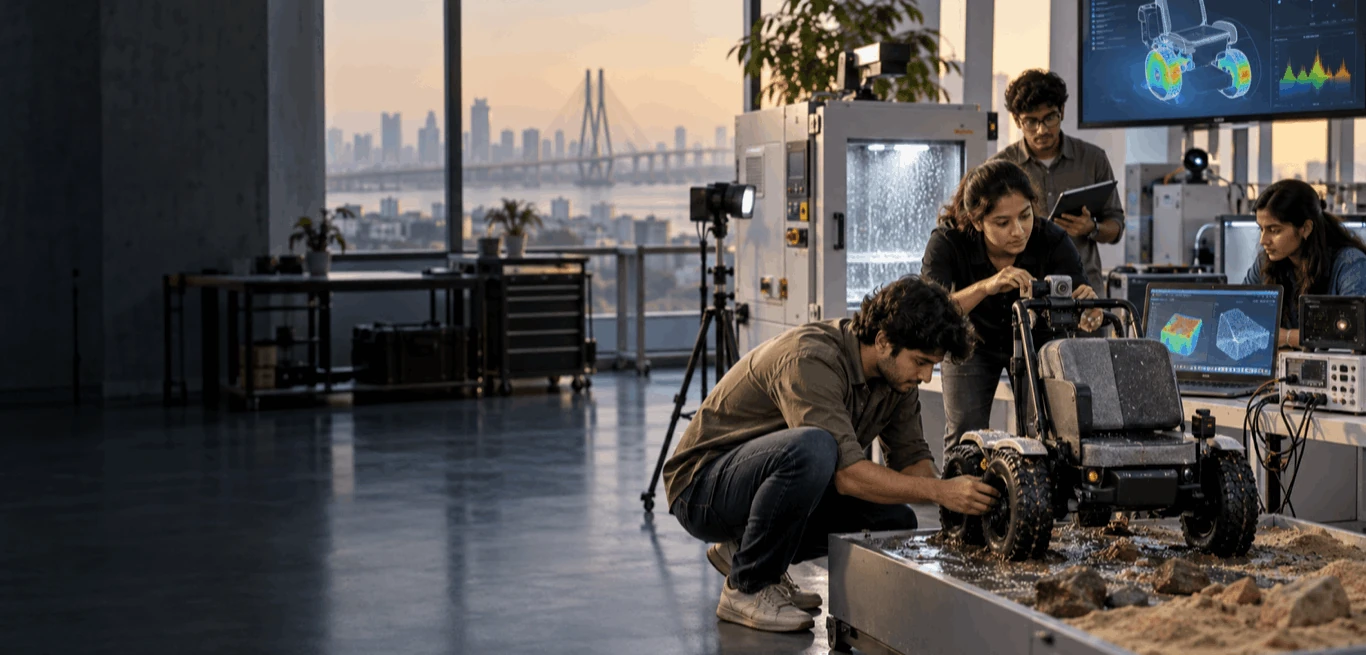
Engineering Integrated
Creative-Communication Angle
Also Makers
the people who design the world
you interact with.
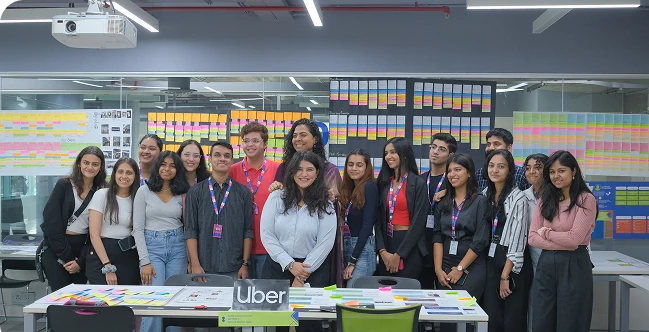
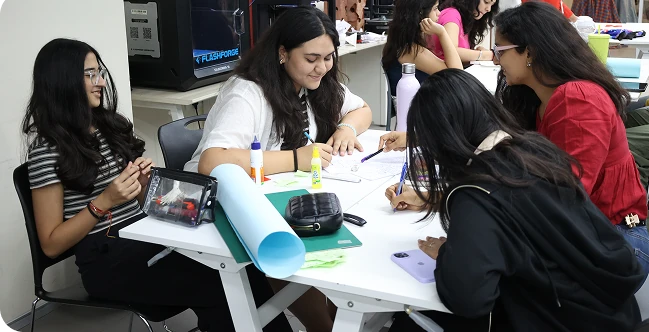
Studio Experience
Disciplinary
Where concepts meet execution,
in and beyond the classroom.
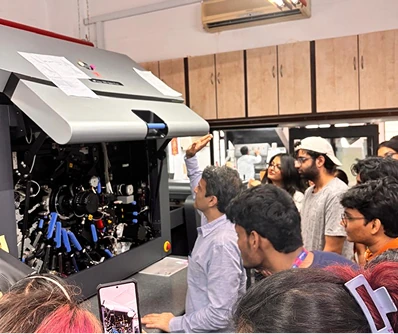 Repro House - For CD 3rd YearOrganized for 3rd-year CD students, the Reproscan Printing Press visit offered hands-on exposure to publication design, printing, and finishing processes bridging theory and practice while deepening understanding of the printing industry.
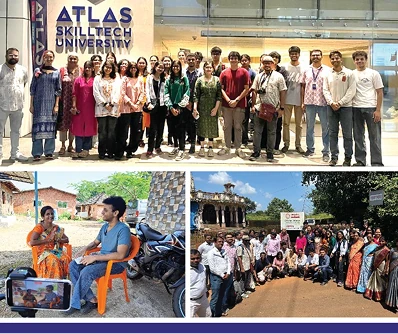 Visit to Swades VillageAs part of the Design Research and Ethnographic Study course, Communication Design students from ATLAS SkillTech University collaborated with the Swades Foundation for a two-day immersion in Raigad villages, gaining firsthand insights into rural life, culture, and development initiatives.
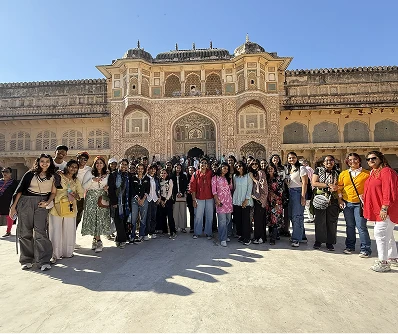 Jaipur ImmersionThe objective was to take them through the cultural, art and monumental heriatge of Jaipur. We also attended Workshops -Block printing , hand painting, Meenakari, Puppet making (storytelling) Meenakari jewellery. Blue pottery, Lac bangle making, Phad paintings
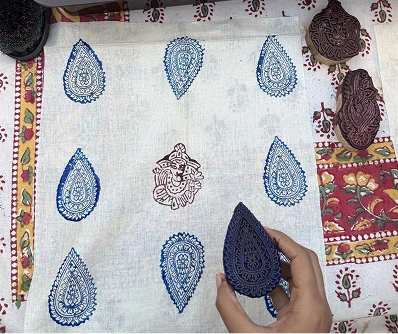 Workshop on block makingDuring their Jaipur trip, CD students explored the art of block printing, witnessing artisans carve intricate wooden blocks and trying the craft themselves, mixing colors, aligning patterns, and experiencing the joy of bringing designs to life.
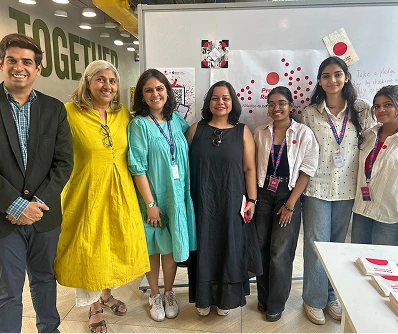 Portfolio Review with Tanu Sinha (Design head Pepsico India)3rd and 4th year CD students showed their portfolio work to PepsiCo and South Asia, head designer Tanu Sinha. She loved the work and gave them good feedback to improve on them. She was all praise for their maturity, skills and confidence in presenting.
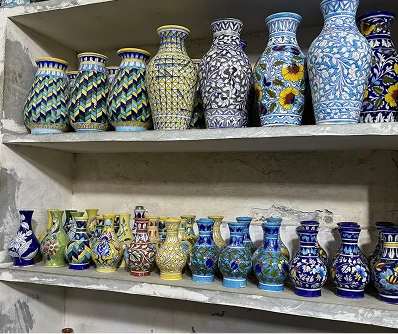 Blue pottery workshop at JaipurDuring their Jaipur visit, CD students met skilled Blue Pottery artisans, learning about the craft’s Persian origins, Jaipur’s role as its hub, and the intricate process from molding to glazing while also understanding the challenges artisans face in preserving this traditional art.
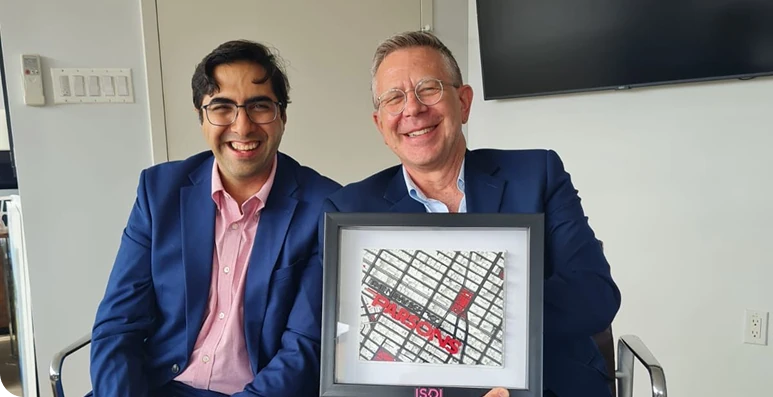
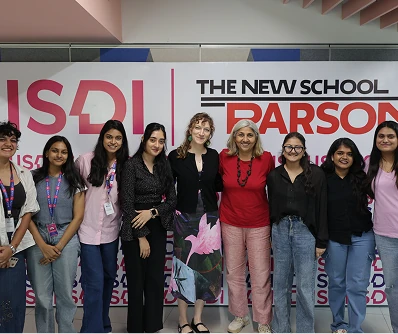 Portfolio presentation to international faculty Amanda from Parsons.3rd year showcased their brand and semiotics work to Prof Amanda, Parsons The New School and received feedback. She loved their work and gave some very positive feedback.
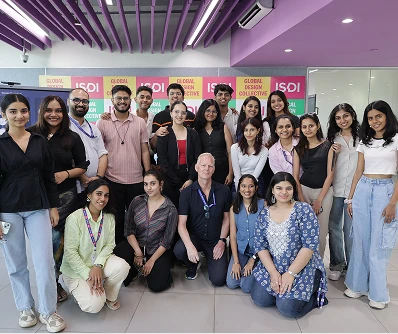 CD Students at WDCDWhat Design Can Do (WDCD) is an international organisation that seeks to accelerate the transition to a sustainable, fair and just society using the power of design. Based in Amsterdam, with hubs in São Paulo, Mexico City, Delhi, Nairobi and Tokyo, WDCD started in 2011 and is initiated, curated and organised by creatives.
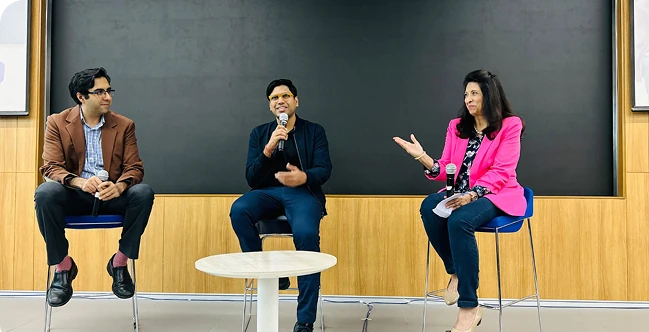
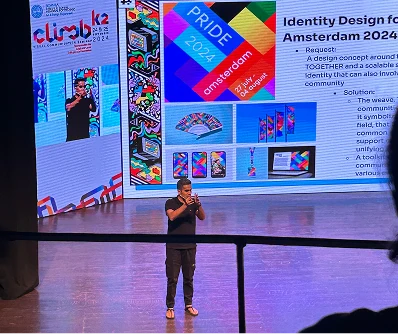 Climb K2 - 2 daysOrganized by the Art & Design Department of Sophia Polytechnic, Climb K2 is a visual communication seminar that unites art students across Mumbai, featuring industry leaders who inspire through their creative journeys and showcase design’s transformative power.
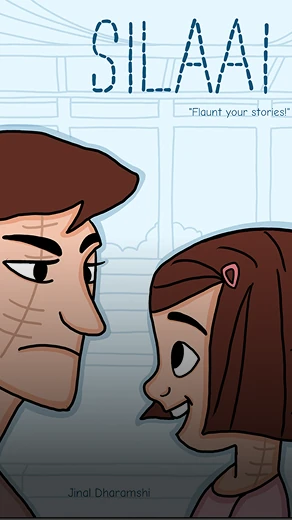
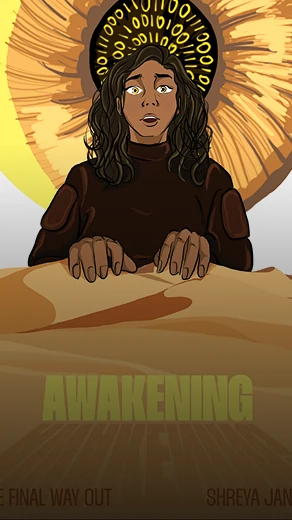
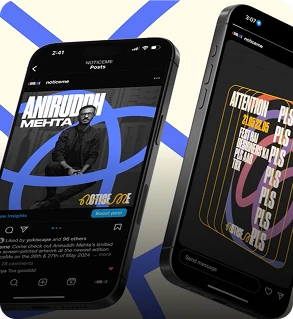
Student Projects in Motion










Student Voices: Real Voices from the Program
 I am loving the studio day and am enjoying watching what people are doing across teams
 Janhavi ChaudharyClass of 2023

- We have learned so much about the industry. I am so happy to be practicing it now.Arundhathy VarmaClass of 2025
- I love our college, I am so proud of my college and excited for what’s next. I feel prepared thanks to everything my college has done for me.Anushka AgrawalClass of 2025
- I’ve learned a lot at ISDI. I have had a great support system and thanks to that I have joined a company as a Lead DesignerIshaan MoirangthemClass of 2025
Ready to Build a Design Degree
that’s Built for the Real World?

Questions? We can read your mind
Yes, ATLAS ISDI School of Design & Innovation offers Communication Design as a specialisation under its 4-year B.Des program. The institute provides:
Career guidance and industry exposure
Support in portfolio development
Assistance in exploring internship and placement opportunities
The communication design curriculum taught at ATLAS ISDI School of Design & Innovation differs from other courses teaching communication design because our curriculum has been designed in collaboration with Parsons School of Design. It helps students with:
Visual communication and storytelling
Design fundamentals and digital media practices
Studio-based and project-led learning
Real-world problem-solving through design projects
To apply for Communication Design at ATLAS ISDI School of Design & Innovation, candidates must have:
A minimum of 50% in 10+2 (or equivalent) from a recognised board
A Design Portfolio or take the Design Aptitude Test
Personal Interview
Yes, students at ATLAS ISDI School of Design & Innovation may have opportunities to engage with industry professionals through:
Guest lectures and workshops
Project-based learning
Exposure to real-world design briefs
These interactions help students understand industry expectations and practices.
There are many career prospects one can consider after graduating from Communication Design. The diverse field opens doors to many opportunities, such as:
Graphic Designer
Content Designer
UI Designer
Social Media Strategist
Visual Designer
Digital Interaction Designer
Packaging Designer
System Engineer
Branding specialist
Brand & Way Find Designer
Yes, ISDI provides global exposure for its Communication Design Students. We have a curriculum which has been designed in collaboration with Parsons School of Design. The curriculum covers:
Global topics, which help students gain knowledge from a wide spectrum
It helps students work on challenges which are prevalent in the field
It allows students to understand in depth and apply the knowledge with live projects
The curriculum integrates disruptive design sense with experiential learning
Yes, the Communication Design program at ATLAS ISDI School of Design & Innovation benefits from collaboration with Parsons School of Design. This ensures:
Exposure to global design methodologies
Contemporary and relevant curriculum frameworks
A balance between conceptual and practical learning